My Time with A Modern Radar Detector

Have you ever wondered if radar detectors still work? They were all the rage back in the day. I remember having one in my Mustang. It faithfully hung from its little suction cup on my windshield for years. It’s annoying squawk and flashing red LEDs reminding me to slow down. I eventually lost track of the power cord. Most of my driving was just for commuting by then so I didn’t bother replacing it.

Recently, I was watching a video on YouTube where the creator was discussing the true cost of speeding tickets. They had mentioned radar detectors as one method to avoid being saddled with the exorbitant insurance increases. I decided that I wanted to find out what modern detectors were like.

I did a bunch of research and narrowed down the field to a couple of choices. At first, I was pretty convinced that I wanted an Escort MaxCam 360c. It combines a high-end radar detector with a decent dashcam in a single unit. There are some trade-offs of course. It is both larger and heavier than a standalone detector. Some people report that the range is shorter than its standalone counterpart. It’s also incredibly expensive at almost a thousand dollars.
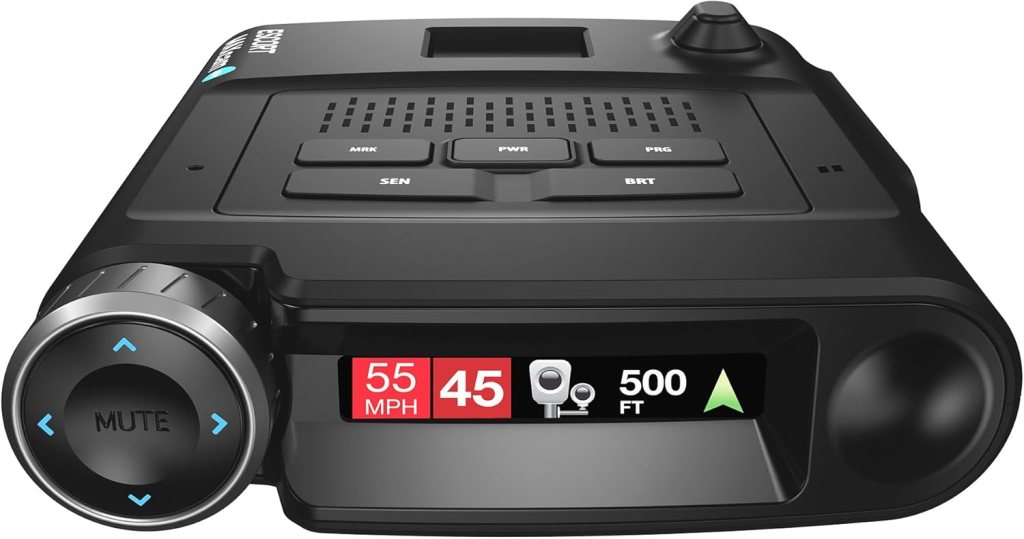
What really dissuaded me from going with a combo unit was the difference in pace between each technology’s development. Radar detector improvements are slow. People keep these things for several years. Camera upgrades on the other hand, are fast and furious.

Eventually, I chose the Escort Max 360c Mark II. It was on sale at my local Best Buy for $499.00 which is in the middle of the cost spectrum for these types of devices. It has a ton of features and functions for its price. One that stood out is the expansion capability. Escort makes an add-on camera module that costs around $150.00 online. There are only a few detectors on the market that offer an expansion feature.
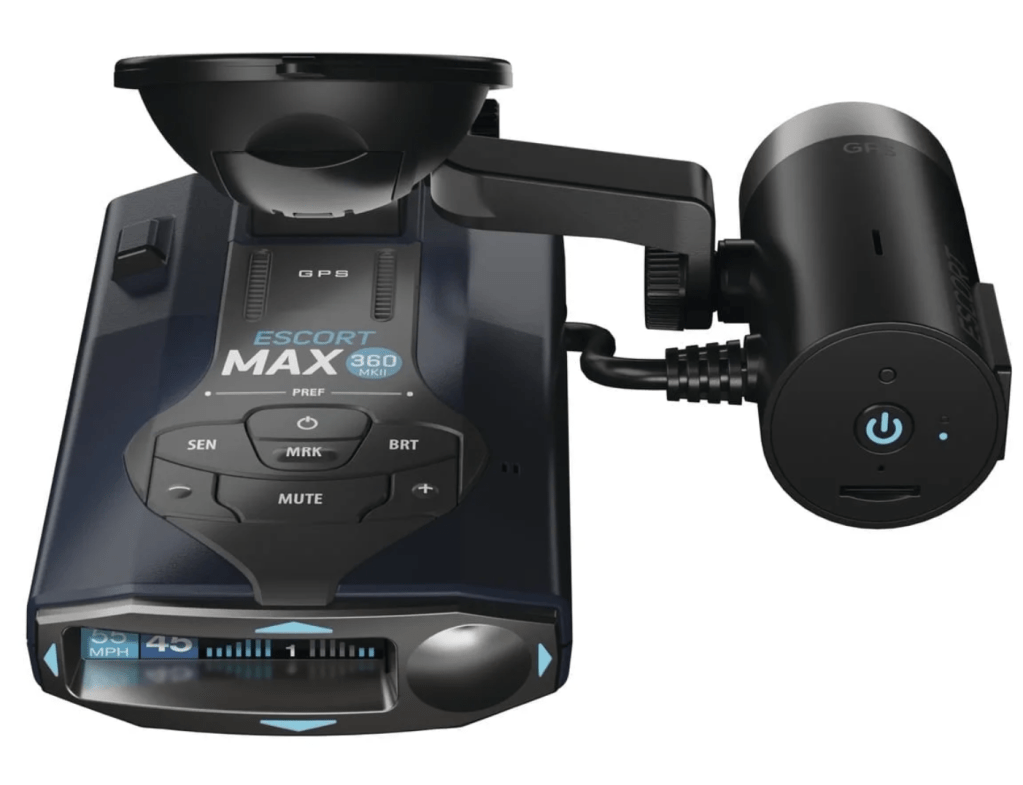
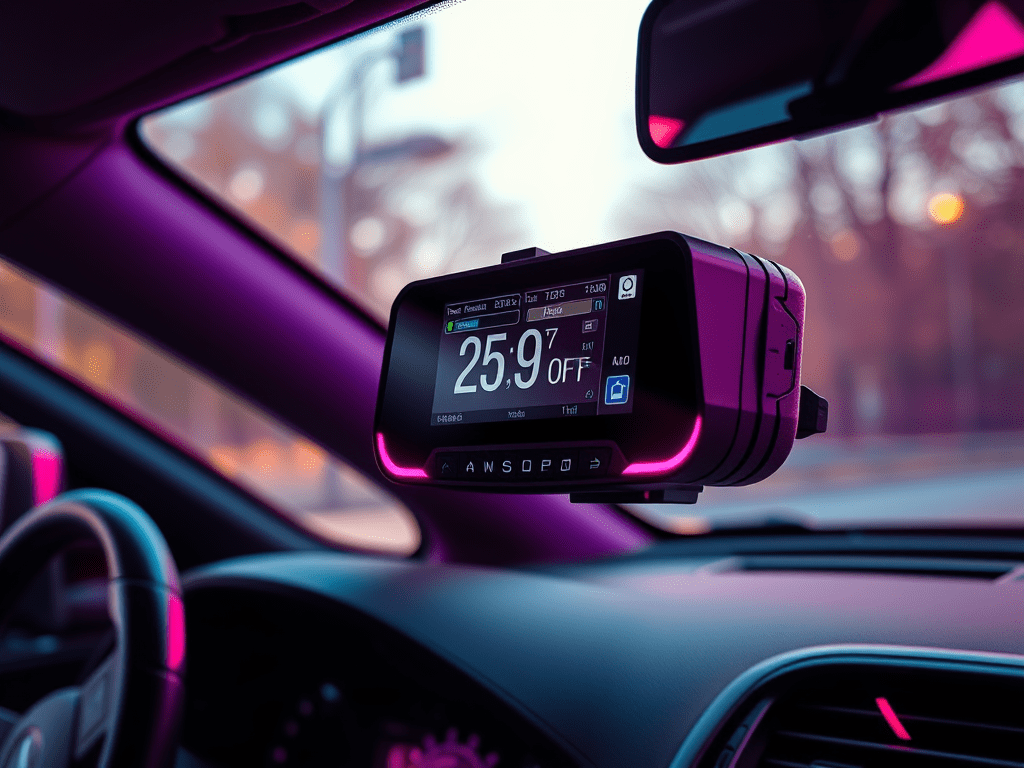
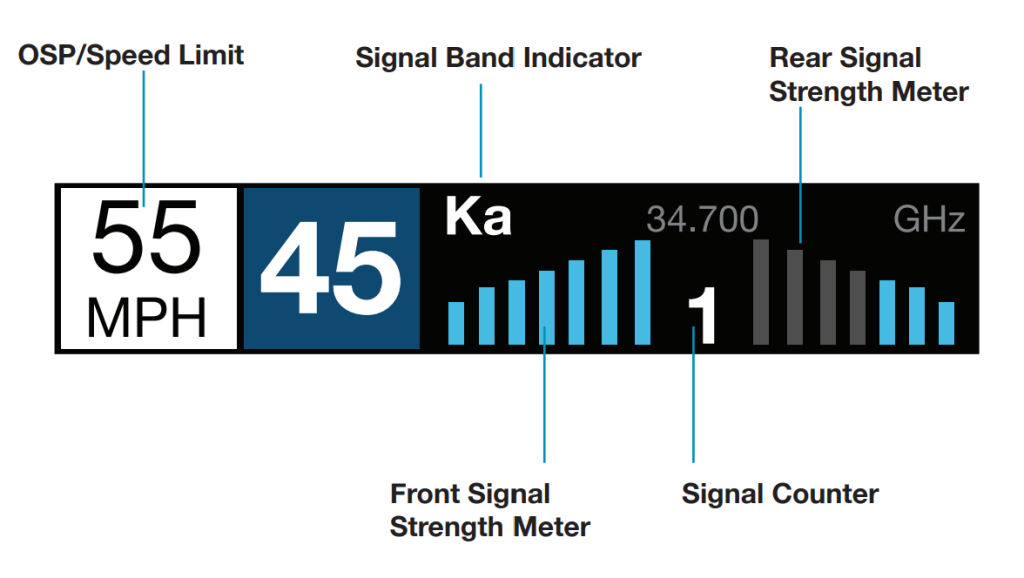
There are multiple radio sensors in the 360c’s chassis. Its brain tracks which one gets hit by the radar gun’s pulse first. The detector uses that information to calculate which direction the hit came from. It also works out how strong (far away) the signal was. A directional arrow on the screen tells you where to look. Bar graphs on the screen show you how much energy the signal carried across each sensor.
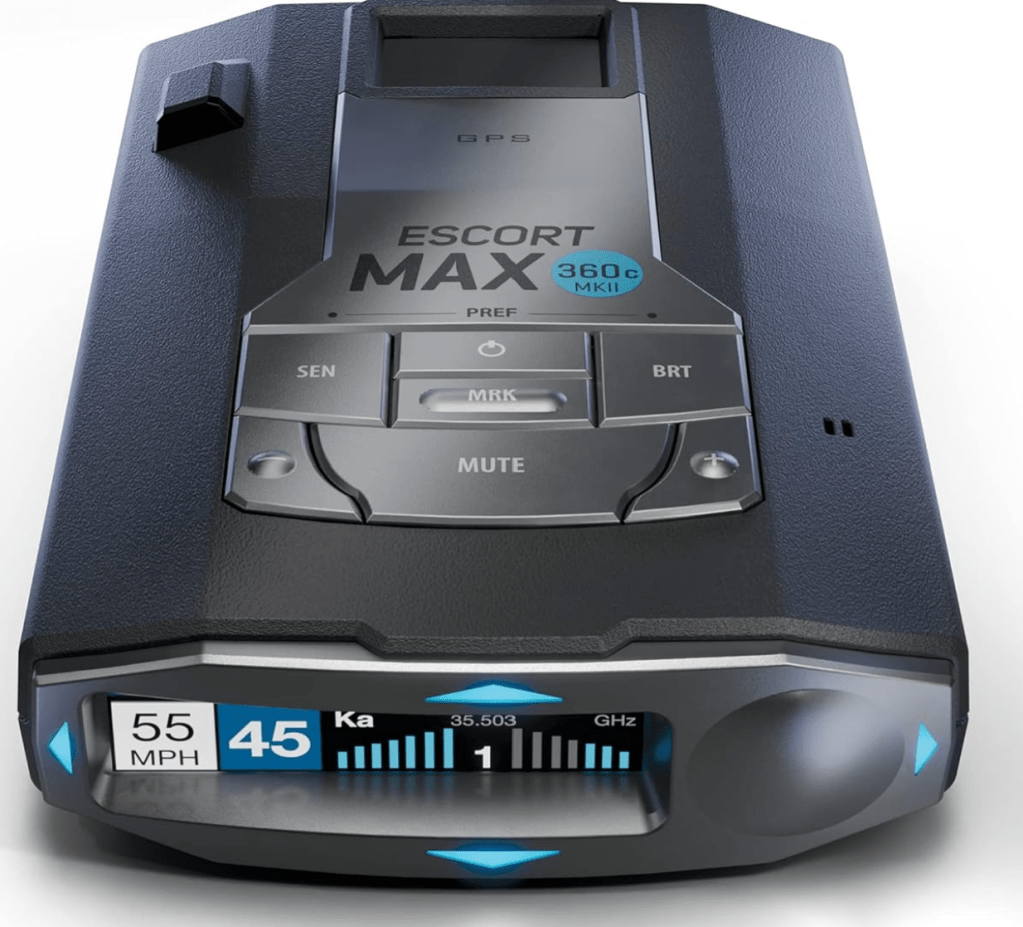
The Max 360c Mark II also has a built-in GPS sensor. The unit will warn you when you are over the speed limit by a certain amount (you set). It can also warn you about known speed cameras and other road challenges in your vicinity. It uses the GPS to record each detection it makes in an internal database. If the same detection is made three times that location is marked as a false positive result. False alerts played a big part in giving up on radar detectors the first time around.

I also ordered a couple of radar detector/dashcam mirror mounts from Amazon. The mounts are comprised of an articulating clamp. This clamp attaches to the support your rear-view mirror hangs from with a U-bolt and a couple of nuts. They were easy to install in both of my vehicles. The radar detector magnetically attaches to them which makes moving between vehicles much easier.
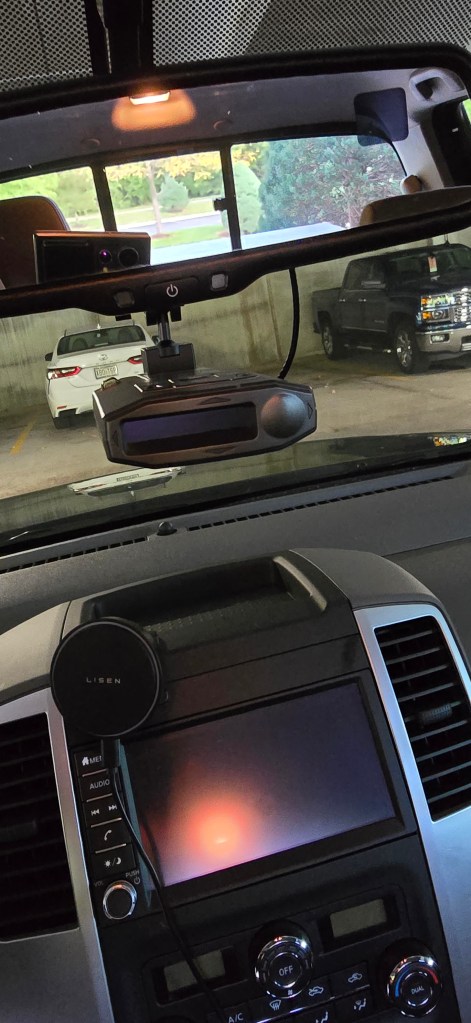
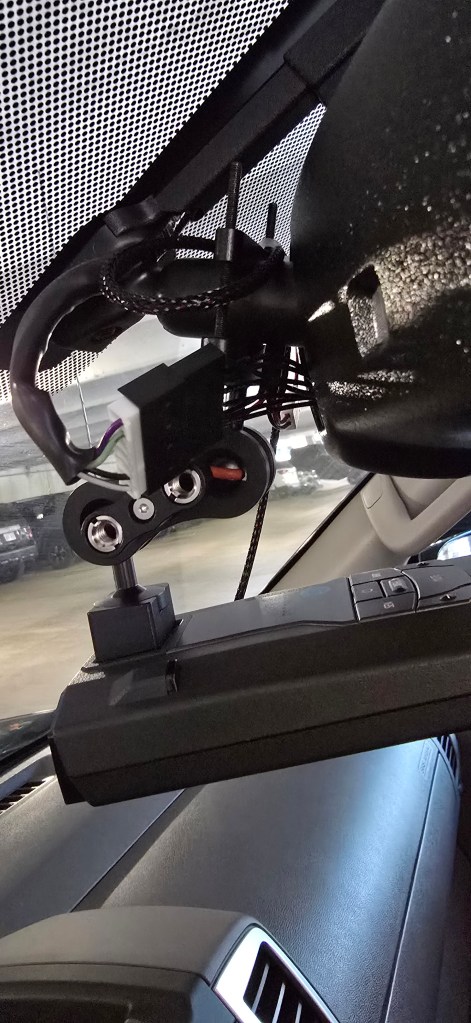
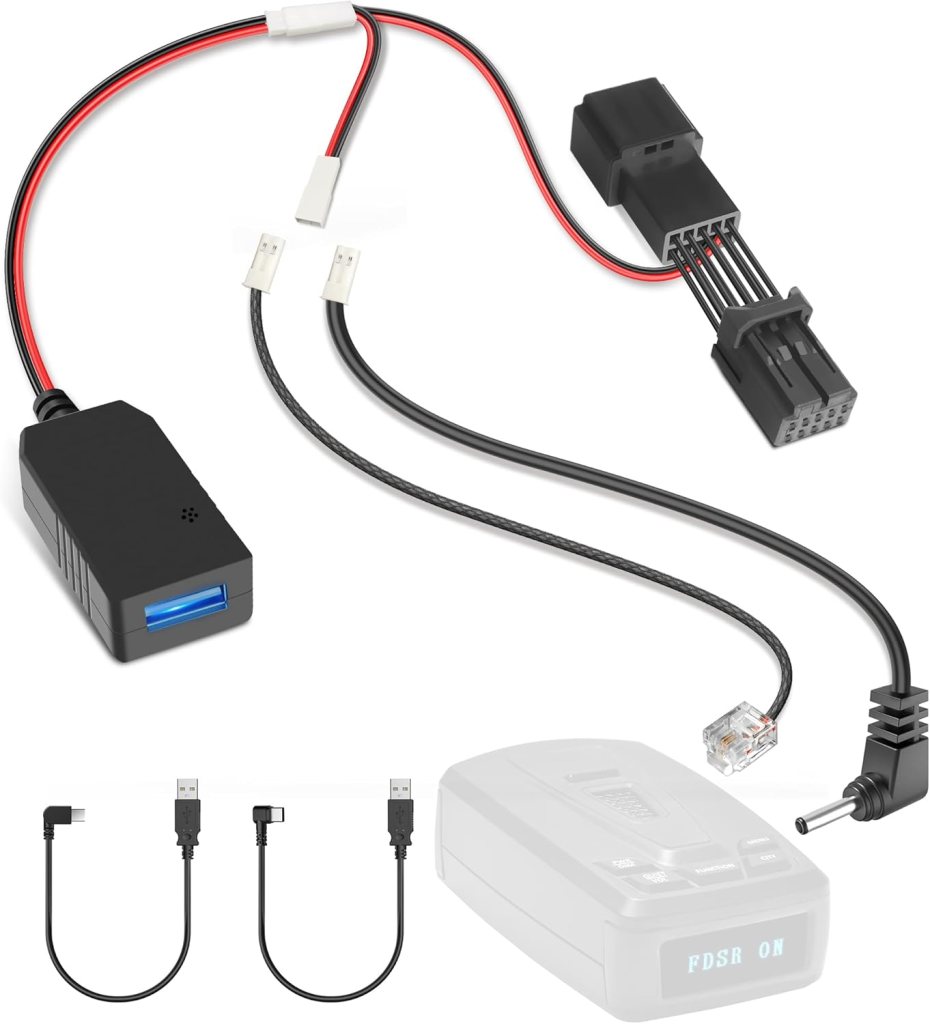
The 360c Mark II comes with a cigarette lighter based power cord. Our car does not have this type of power connector. Like I said, radar detector tech is in the R&D slow lane. Oh well, I wouldn’t have wanted the cable stretched across my dash and windshield anyway. I ordered two mirror power pass-through adapters from Amazon. They power the detector and add an extra USB power port near the windshield. If you’re in the market for one, shop around. The first ones I found were more than $100.00, these were $24.95.
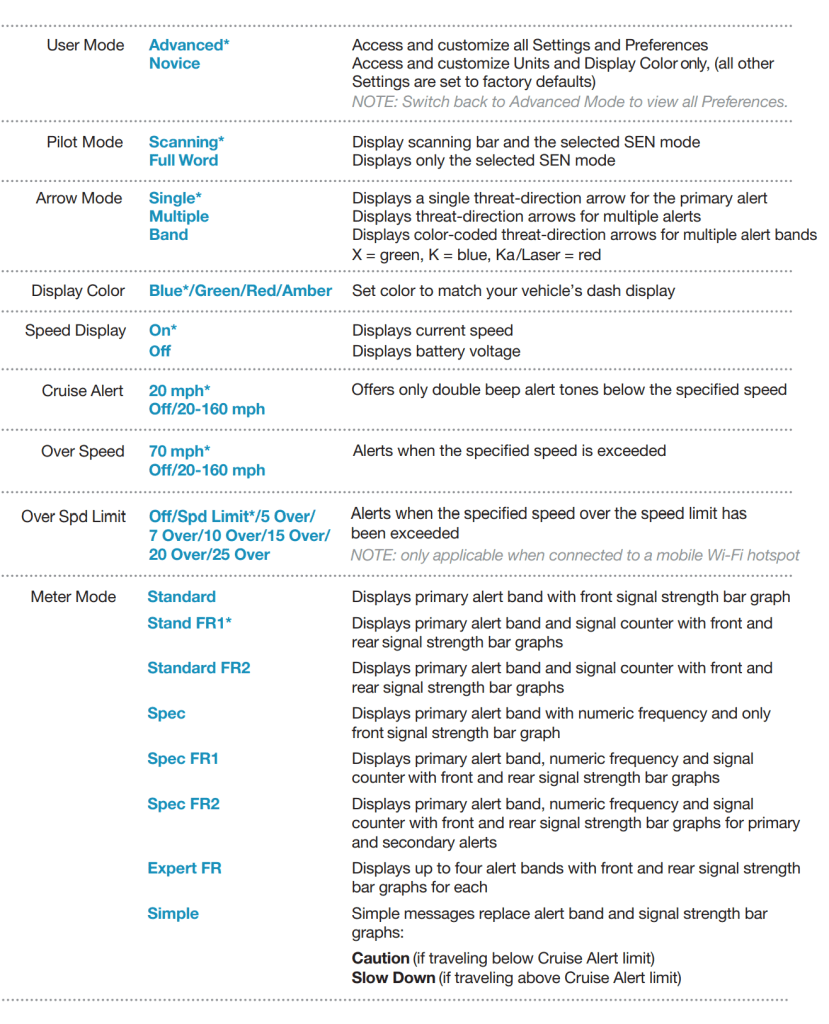
I had intentionally ordered the Max 360c and accessories a couple of weeks before a big family road trip. We’d be driving nearly two thousand miles in total. I got the detector mounted and all the options and preferences configured to my liking before we left. The Mark II has dozens of settings you can adjust. You need to install the Drive Smarter app on your phone and connect to the detector via Bluetooth. Then you can use the app to manage the device’s configuration.

There are a lot of settings that control the receivers themselves. Things like which one is active when, how sensitive they are to the different radar frequencies, that type of thing. I left them on automatic. You can change the alert tones, set speed limits, change the look of the screen’s various messages, and more. It is a little over-whelming at first, I left most of the settings on automatic.
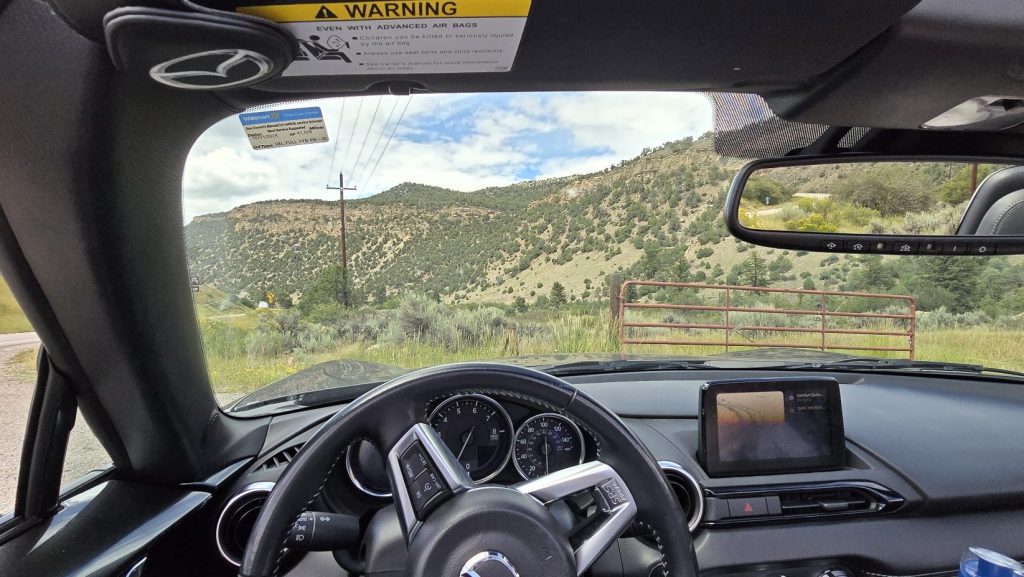
The trip involved driving through small towns, hundreds of miles of highway, and navigating two major US cities. We went across the Midwest Plains and up into the Colorado Rocky Mountains. The Escort worked better than I had expected. One of my concerns had been the proliferation of laser speed guns.

The Escort 360c Mark II can detect lasers from both the front and back. Unfortunately, that still isn’t a lot of protection. The speed of light is nearly instant at these distances. You don’t get enough of an advanced warning to adjust your speed. I had assumed they would be everywhere by now, given that they existed way back in the nineties. To my surprise, the laser band was only triggered a handful of times on the entire trip.

The direction indicator works as designed. I visually located the source of the signal in most of the detection events that were triggered on our trip. In fact, to answer my opening question, yes, radar detectors still work in general. They also still have all the same problems.
False alerts are minimized by the GPS system, but they still happen a lot. On one-time trips like ours, the false alert database doesn’t apply at all. Physics also suggests problems with the entire concept of radar detection. Radar is faster than you are even when it’s based on a radio wave. If you turn to look and see a cop, it’s already too late.

Shortly after we returned from our trip, my Mark II suffered a major hardware failure. The GPS receiver failed, and the screen would only flash an error. During the trip I learned something important. I don’t have any need for a radar detector. I’m a safe driver that follows the rules of the road. So rather than exchanging my broken unit (they offered), I returned it and all the accessories for a refund.
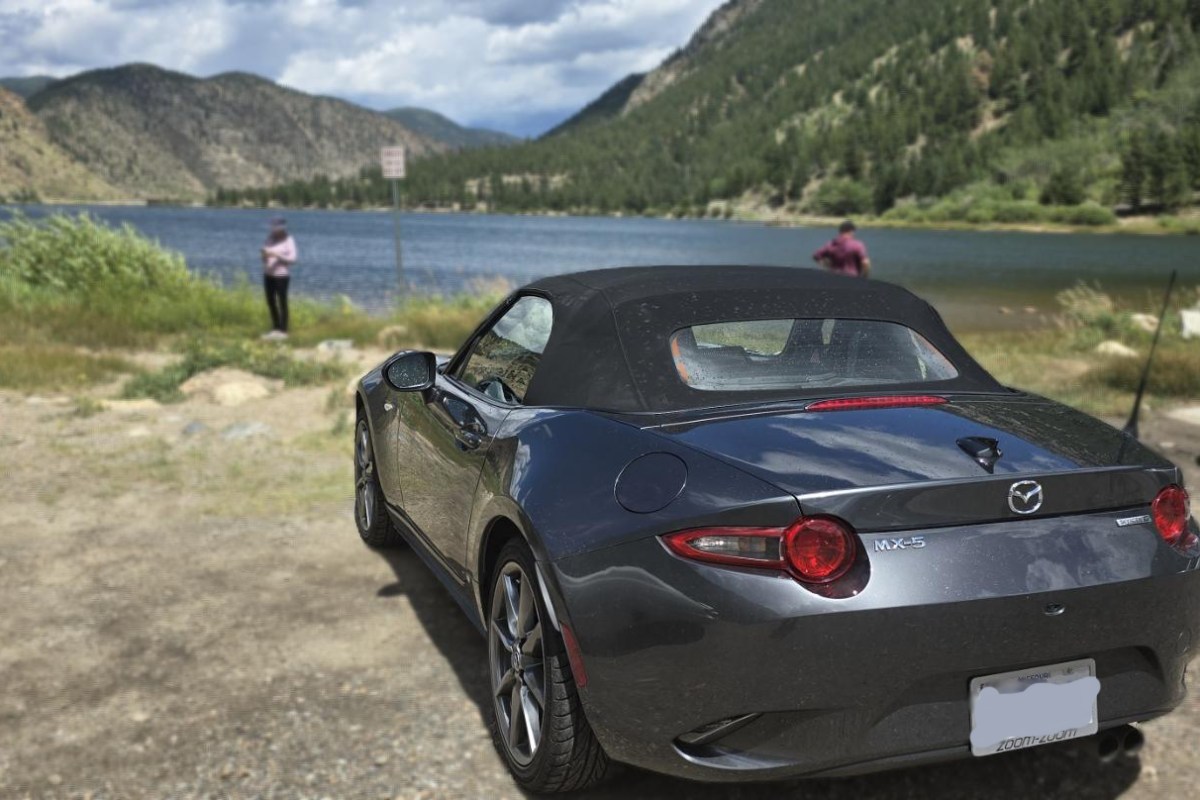
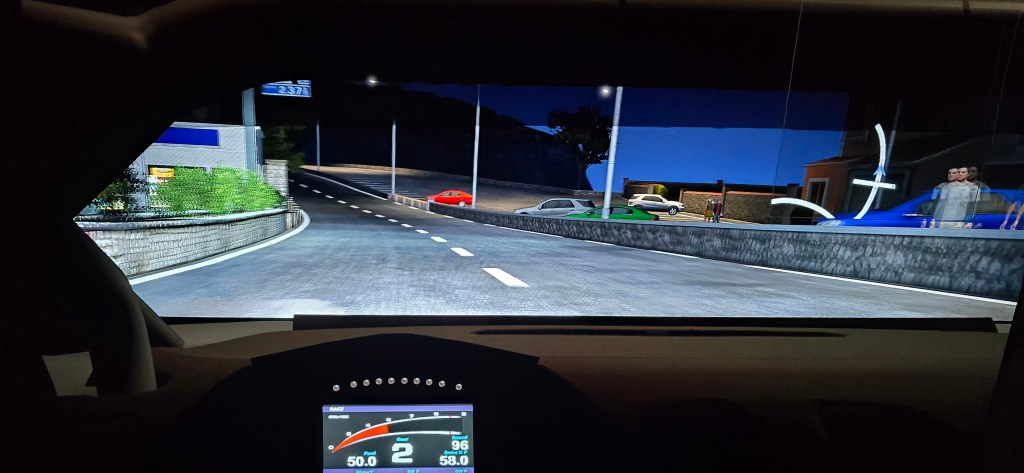
Glenwood Springs Colorado in a Miata. A Great Vacation for Driving Enthusiasts

For me, no matter how good a simulator is, the real thing is always better. Graphics in current games do not quite meet the threshold of “realistic”. They’ve come a long way. However, many compromises are still required to keep the frame rate in an acceptable range.

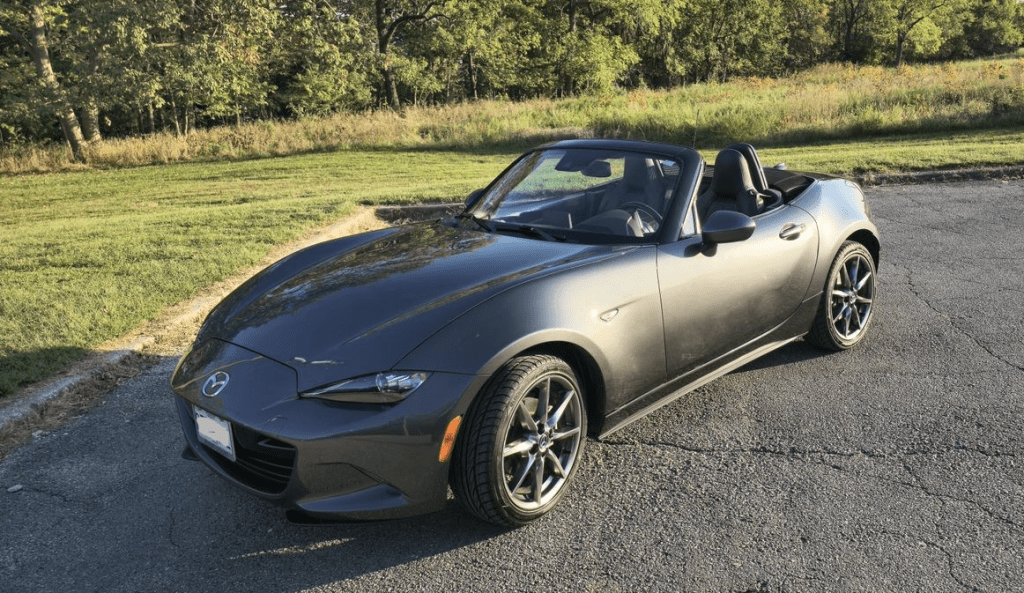
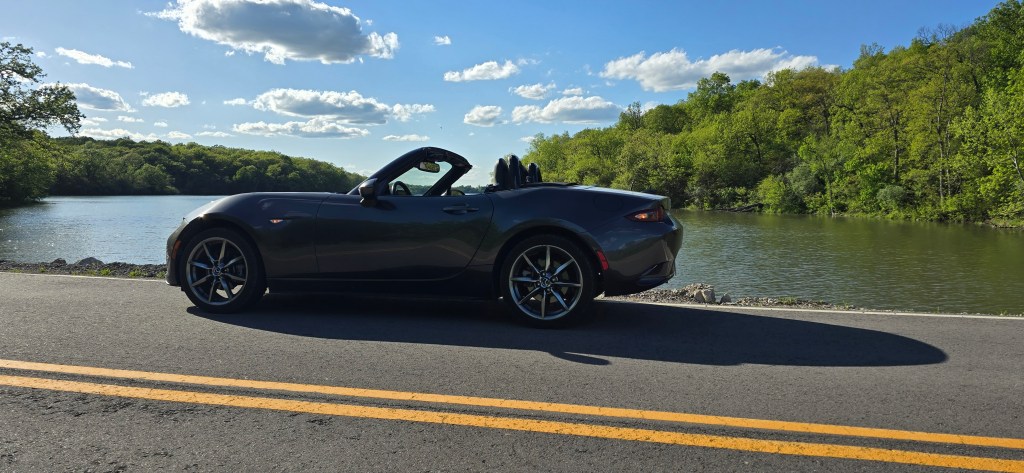
In addition to lackluster visuals, simulations of the real world lack real risk. There are no real consequences for making mistakes and crashing your virtual car. So, like a lot of sim-driving enthusiasts, I have a real sports car too. A 2021 Mazda Miata MX-5, soft top, Grand Touring to be exact.

The car is epic for those of you wondering what the little roadsters are like. If you get the chance to drive one of the 4th generation cars, I recommend taking it. I’m on track to put twenty-thousand miles on mine this year even though its ostensibly not my daily driver.

There’s no storage space. Other than that, the interior features attractive black leather. It also has large circular metal trimmed gauges and dials. The steering wheel feels fantastic with its buffed leather covering.

I’ve owned muscle cars like Mustangs, Chargers, and Camaros. I’ve had smaller performance cars before to. I once owned a Fiat X19 targa top that I loved. My brother had a Conquest TSI that I enjoyed borrowing once in a while. I’ve also driven several other performance vehicles over the years. The MX-5 offers a better overall driving experience than any of them in my opinion.

Its not just me, the Miata scores high in driver satisfaction for many enthusiasts. You can use all of its potential all the time. When you drive seven hundred horsepower hellcats on public roads, you can’t push them to their performance edge. Well, I guess you can, but eventually you’ll have to pay society back for putting citizens at risk like that.

By comparison, you can launch the MX-5 into a corner at max G, tires barely holding the curve. It will be wrapped out in second gear. You’ll feel like you are about to hit warp speed and slide off the road. If you look down to the speedo, you will see that you are still under the speed limit.

At around twenty-four hundred pounds, it is one of the lightest cars on the road. The weight is distributed fifty-fifty front-to-back. The mid-front engine rear-wheel drive configuration is a classic driver’s setup. Mine is a six-speed manual. Both the clutch and shifting are superb.

There are plenty of safety and creature comfort features in the Grand Touring package. Heated leather seats, heated auto darkening mirrors, headlights that follow the steering and automatically control their brightness are a few. There are also automatic windshield wipers, lane departure detection and warning, and air bags everywhere. The car even holds itself in place while you work the controls to launch on steep hills. No clutch slipping needed.

The light car is super easy to maneuver in almost any situation. There’s load of grip and an active anti-body roll that keeps everything in shape during high mass maneuvers. The traction control algorithm is helpful in tricky situations. Both can be turned off by pressing a button to get a “rawer” driving feel.

The stock suspension is meant for a balance between comfortable road tripping and enthusiastic public road driving. Once you master the vehicle, you will be able to bottom it out on a track. Especially when braking hard into tilted corners. However, the car was designed to be easily modified for track use. Just a few suspension stiffing parts and some safety components are all that is required.

Cruising down I-70 in an MX-5 through Glenwood canyon in Colorado. Filmed on an S24 Ultra by the passenger.

The two-liter inline four-cylinder SkyActiv motor wraps out at 7200 RPM and produces one-hundred-eighty-one horsepower. It isn’t a fast car, but neither is it slow. Zero to sixty takes five point seven seconds, and the top speed is around one-forty. The car feels stable all the way to up to about one twenty. It can start to feel loose after that on some roads with the stock suspension.

Not long after acquiring the Miata, my spouse and I were itching to take it on a road trip. We looked at a lot of places that are known to be excellent driving adventures. Places like “The Tail of the Dragon” in Arkansas, or “The Talimena Scenic Drive” in Oklahoma were on the list. I’m sure we will do both at some point. Neither seemed like a great option during the worst of the mid-west summer heat.

We decided that the mountains would probably offer a reprieve from the consecutive one hundred degree days at home. We thought the cooler mountain climate would boost our enjoyment of the trip. After some research and debate we settled on Glenwood Springs, Colorado as our destination.

We had been there once on a family vacation years ago. I had vowed then to return to the magnificent mountain roads in something other than a minivan. I had the perfect car for it, this was my chance. Let’s go!

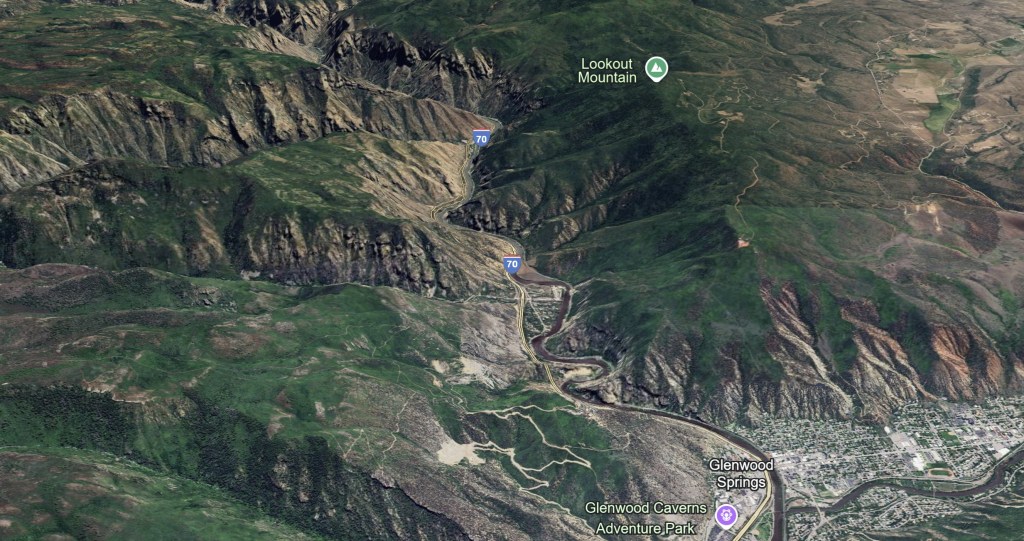
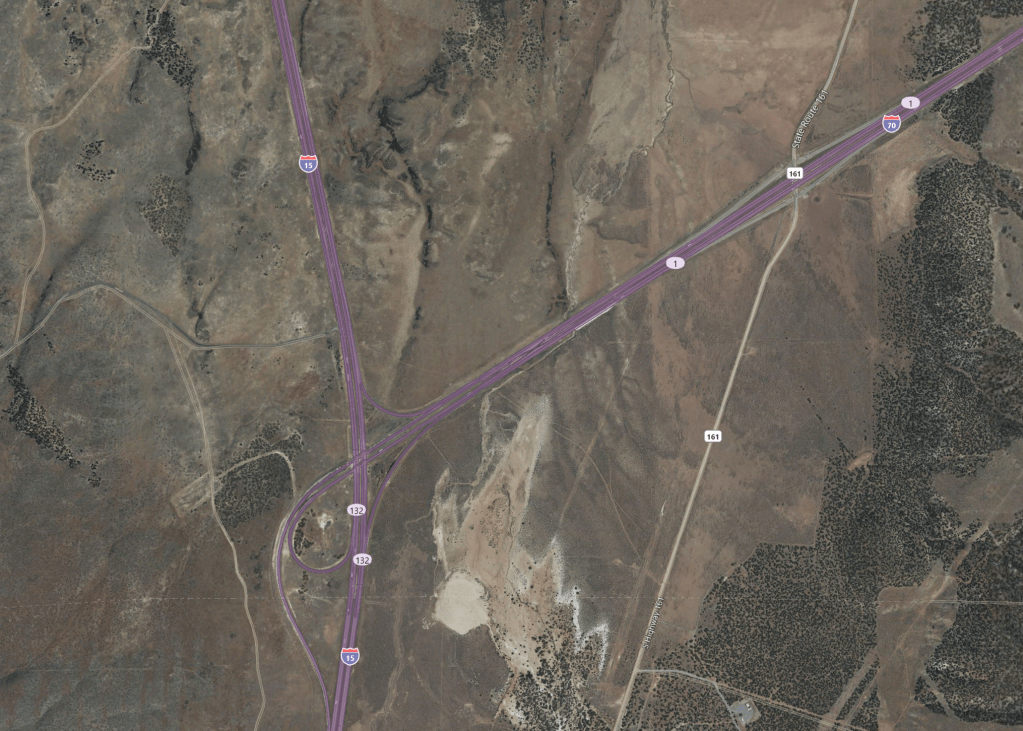
Google Earth provides a bird’s eye view of the freeway’s path through the canyon.

Finished in 1992, the twelve and a half mile stretch of mountain tarmac winds through the majestic river-cut Glenwood canyon. At sixty-one million dollars per mile, it is the most expensive section of the United States’ Interstate Highway System (IHS).

The I-70 corridor runs east and west across most of the middle of the continental United States. I say most because it was never completely finished. Not long after completing the Glenwood canyon stretch, they called it quits. So, I-70 ends in the middle of nowhere Utah instead of at the ocean somewhere in California.

I-70 just kind of just ends in the middle of nowhere. It’s not near any major cities the road dumps on to I-15 and that’s it.

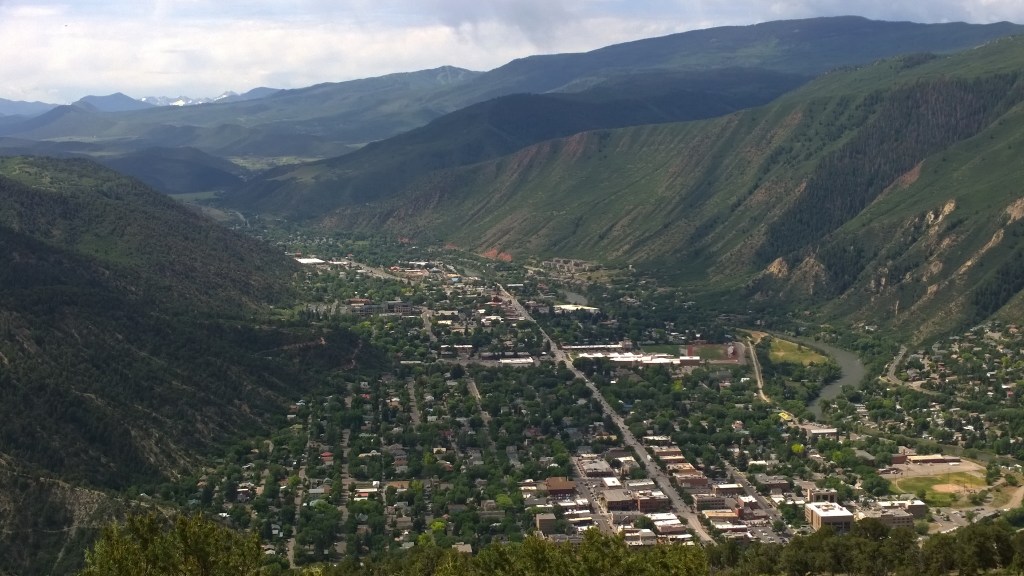
I, for one, am grateful the crews finished the canyon stretch. It offers one of the best public-road driving experiences I’ve ever had. The canyon itself features walls almost one thousand feet high in sections. It also includes sweeping views of mountain vistas. Not to mention beautiful mountain towns, lakes, rivers, waterfalls, hot springs, and tunnels. All of which are features of this marvelous stretch of four lane, split highway.

I-70 Glenwood Canyon tunnel with nobody else in it. The view at the end is amazing. Filmed on an i-Phone 13 Pro Max by the passenger.

The road surface is well kept. Still, it is a challenging drive with numerous hazards that can catch you off guard. During the rainy and snow melt seasons, some of the bigger curves will feature waterfalls. They form where the tarmac hugs up against the sides of the mountains, and rock ledges create overhangs. The runoff streams that flow across the lanes are not only wet, but they can also be incredibly slippery. Algae and moss grow on them in the shady spots. Follow the locals and avoid the dark patches.

Some of the sweeping mountain curves are elevated and thus contain bridge joints. These joints are made of metal that can also cause sudden traction loss. At speed, some of the connection bumps are large. They can cause a light car like mine to bounce off the road’s surface. Speaking of sweeping, some curves tighten as they wrap around mountains. This tightening puts the apex in unexpected places.

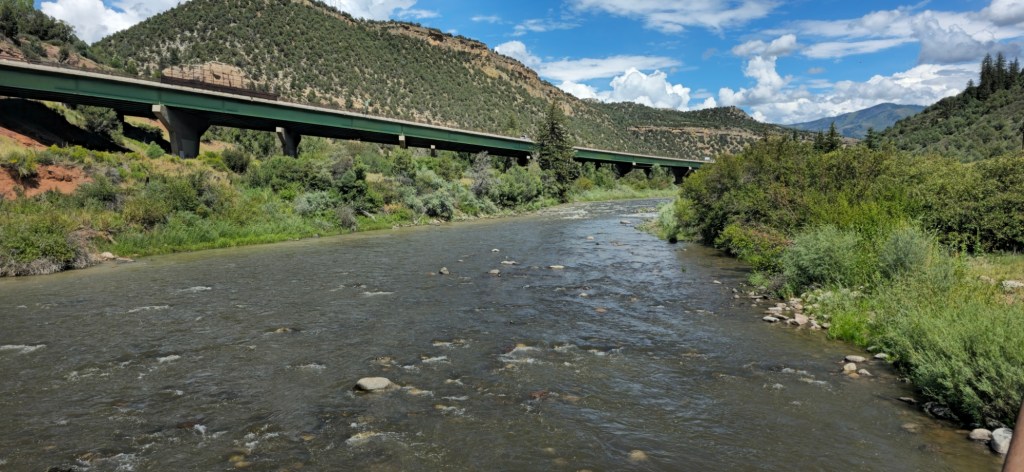
Elevated I-70 follows the river’s path through the canyon.

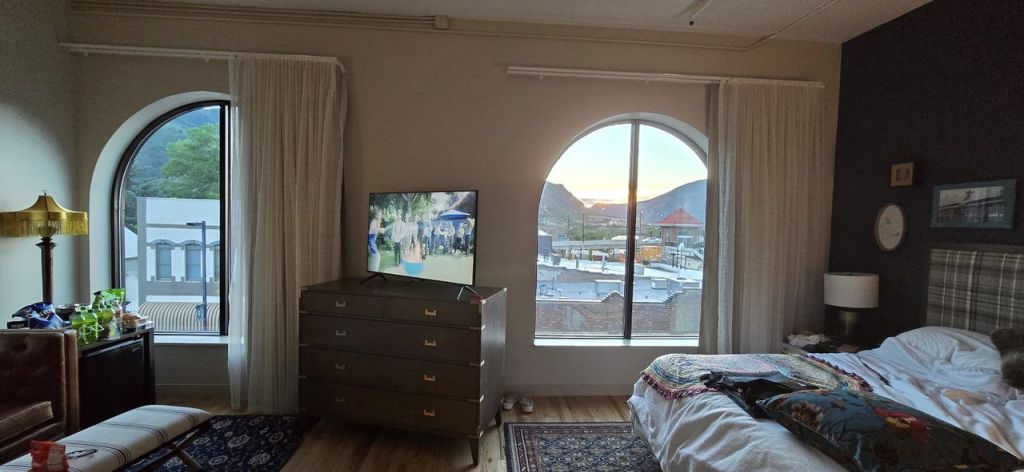
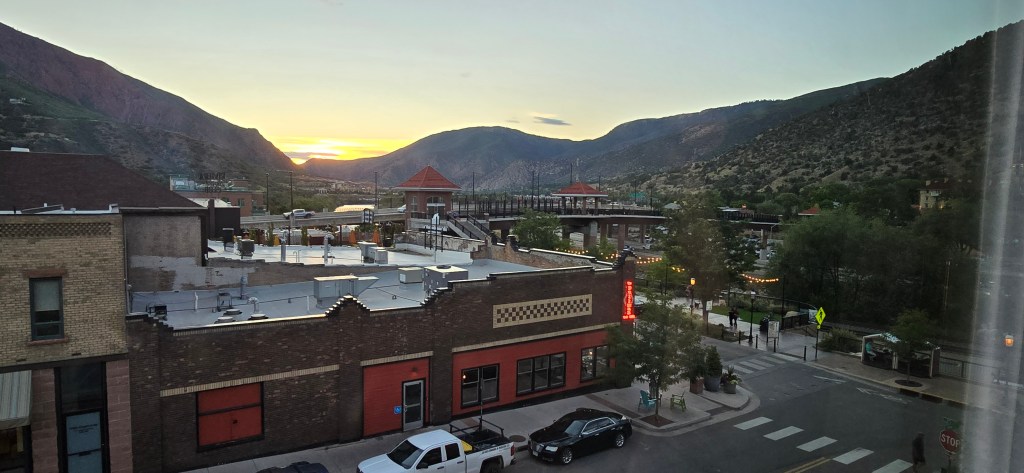
In addition to the driving experience, the city of Glenwood Springs offers a lot of entertainment options. We stayed at the Maxwell Anderson Hotel. The room featured twelve-foot-tall ceilings and arched windows along one wall. They had the most spectacular mountain views. We spent a fair amount of time just hanging out in the room watching the views. The hotel’s restaurant offered great food. It also features a brewery that made some tasty beer. I had one every day after we had finished driving up and down the canyon roads.

Some of the Maxwell Anderson’s rooms feature spectacular mountain views.

The city is famous for large naturally warm hot springs pools. There are three different commercial enterprises that cater to three different hot springs experiences. One is a water park with a hot, lazy river, slides, and giant heated pool. Another is a series of gravel bottomed hot tubs along the side of the river with bars sprinkled throughout. The third is underground, literally in a cave.

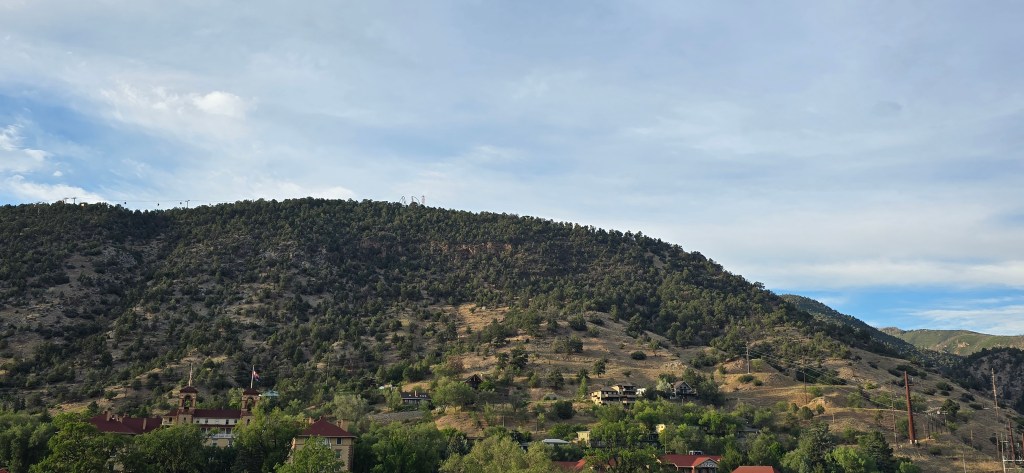
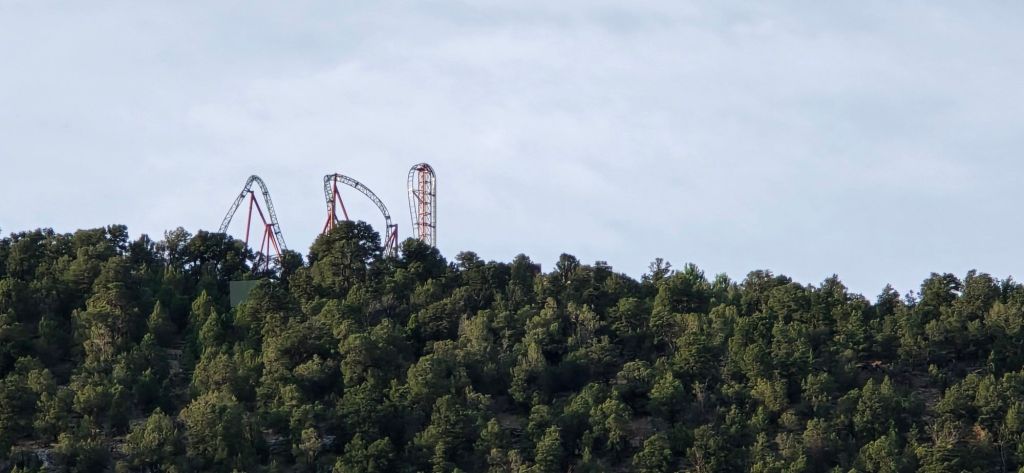
There’s an adventure park on top of the mountain that has roller coasters and thrill rides galore. Riding the gondola to get up to the theme park is a ride all on its own. Restaurants and bars of every kind line the streets in the tourist sections of town. There is plenty to do and see while taking a break from driving. My spouse and I really enjoyed walking around the area. The ice cream and candy shop was a frequent destination of our evening strolls.

Famous Colorado mountain towns like Aspen, Vale, and Steamboat Springs are just a couple of hours driving away. We had a great time on this trip. If you are lucky enough to have a sports car. I highly recommend considering the Glenwood canyon area as something to do with it. I also suggest making a least one round trip through it at night.