Happy World Backup Day 2026! Have you Tested Restoring Lately?

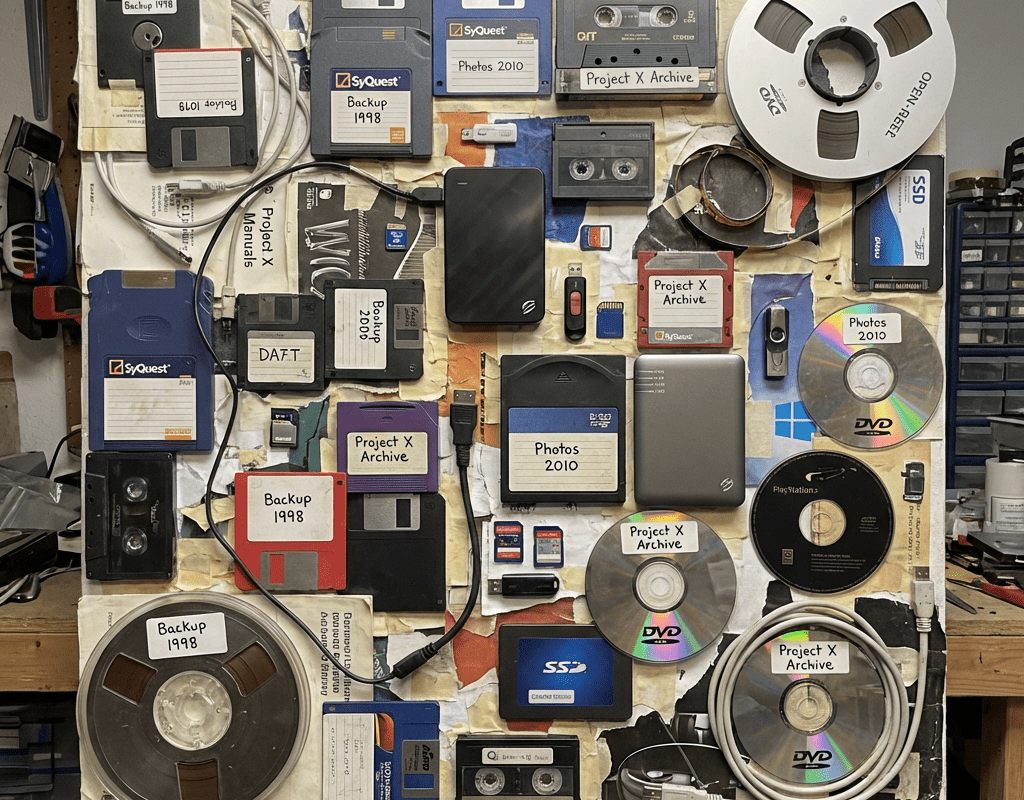
An organized display of data storage media including floppy disks, tapes, CDs, and hard drives.

It has been interesting to watch backup technology evolve over the years. Technological innovations like volume snapshots have made restoring from a backup one of the primary means of recovering from IT issues quickly. It hasn’t always been that way though. In the not-so-distant past, many businesses didn’t value having backup copies of digital information. They operated in a hybrid world where paper was still a functional fallback.

Somewhere between the mid to late nineties paper fell out of being an operational option almost entirely. More data existed only in a digital form. There wasn’t a “hardcopy” someone could retrieve from a filing cabinet. Most business leaders and workers hadn’t really seemed to notice the transition from hybrid to fully digital. On May 5th, 2000, a young Filipino computer science student brought the revelation to everyone’s attention.

Onel de Guzman was trying to steal Internet access. He ended up composing the “Love Bug”, a computer worm written in VBS that had two main functions. It arrived as an attachment in an email with the subject line of “ILOVEYOU”. When someone opened the file, the worm stole the person’s passwords. Then it used their email account to send copies of itself to everyone in their contacts list. The result was an estimated loss of more than six billion dollars. Guzman wasn’t punished because computer crimes weren’t specifically against the law in most places at the time.

Many of the companies that got hit with the Love Bug invested in backup technology. Backup and recovery software packages like Commvault, Backup Exec, and Acronis started to earn their place in permanent IT budgets and staffing. The Love Bug was big, and it caused some level of industry change. Especially in larger corporations. Smaller shops still struggled to justify a capital investment for “something that just sits there doing nothing most of the time”. As it turns out, the universe was not done teaching us its lesson.

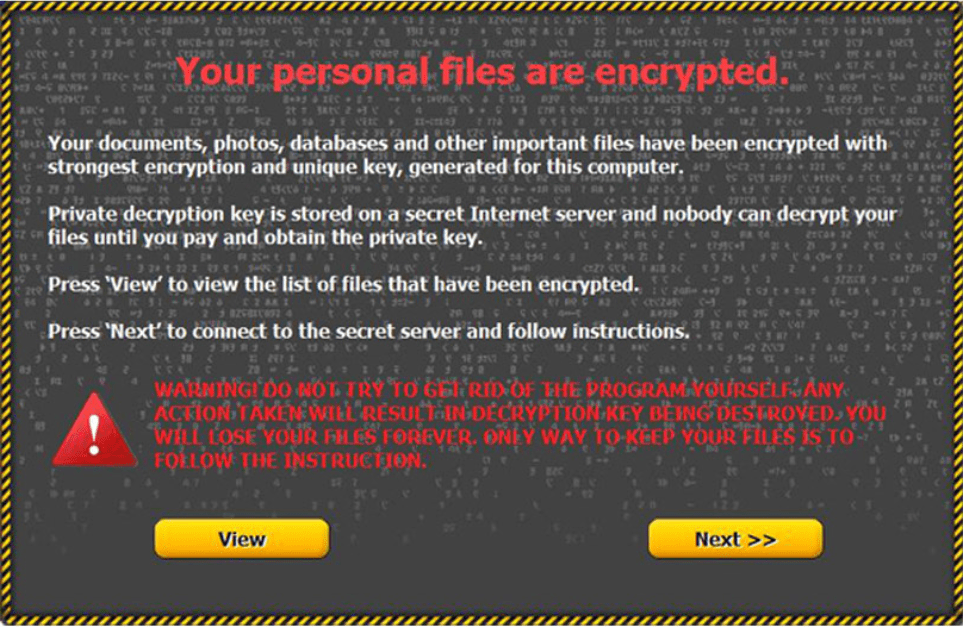
I don’t remember the exact date, but somewhere around the Christmas season of 2010 one of my colleagues asked me to come take a look at something on his screen. There was a full screen dialog box on his monitor that couldn’t be dismissed or minimized. It informed us that his files had been encrypted using a private key. Furthermore, it stated the only way to get access to the files back was to contact a sketchy international phone number and pay them a ransom. It was my first run-in with commercial ransomware.
The impact to businesses from ransomware has been enormous. In my opinion, nothing has transformed backup and recovery strategies across the industry more than ransomware’s direct financial impact. All of the sudden, your companies’ data and systems didn’t have to be valuable to a third party to make you a target for computer criminals. Small businesses were practically defenseless against these types of attacks, and the black hats of the world knew it. Organized dark business that operated on Bitcoin sprang up to blackmail the world’s companies into paying to get their own data back. They made away with untold billions in pure un-taxed and un-traceable profit.

One of the best defenses against ransomware was and is a good backup and recovery strategy. Companies rushed to move their data into the cloud where it was copied multiple times. Other organizations hired MSPs to get the technical help they needed to implement sound backup strategy. The “No thanks, I’ll just have my IT team restore it” answer, really took the wind from the bad guy’s sails. Making restoring faster and easier than paying has had the effect of robbing the entire dark business model of its profit motivator.

Ransomware still exists, but it has been diminished. Start-ups rarely enter the market without proven backup and restoration methods now. Investors know to inquire about recovery options. Work forces have been trained to scrutinize the minute details of emails and other incoming communications. Security scanners and teams have been deployed. Data loss is taken seriously by business leaders that used to be far removed from IT.

If my time in IT has taught me anything, it’s that the “next big thing” is just around the corner. Whether that thing is a marvelous invention, or the next super effective way of robbing the world’s companies is always a gamble. Now that most of us have backup solutions in place, the challenge is to not become complacent. Automation fails; backups can be located and compromised, and restoring isn’t an answer to the problem if it takes too long. When was the last time you fully tested restoring your company’s data? Today is a good day to get started on that.

Is Virtual Reality Still Worth the Cost and Effort?

I have long been enamored by the experimentation and learning that is achieved via simulation. Simulation is used in everything from lab experiments to analysis models. The concept of simulating circumstances and environments has arguably helped jump start the modern era.

Virtual Reality (VR) is the ultimate form of simulation in the digital realm. One could argue that no single entity has pushed the technology further than Oculus ->Meta. I first noticed Oculus when they demonstrated a prototype of their glasses at E3 back in 2012. I purchased the first gen Oculus Rift on launch day and have been involved with the VR ever since.

Like a lot of folks, I’ve spent money and put countless hours into my VR hobby. I’ve replaced computers, upgraded GPUs, and installed new network gear. I’ve bought a driving simulator cockpit. I coped with the horrible performance of early systems. I pushed through the VR induced motion sickness. I have a near permanent kink in my neck from wearing the heavy face masks too much. As I sit here writing and reflecting on everything. I find myself wondering, “Has it been worth it?”

Yes. The answer is yes.  Even with all of its flaws, virtual reality is still one of my favorite forms of entertainment. Nothing else immerses me in an activity like VR. The experiences invoke much stronger reactions than equivalent flat screen activities. I’ve caught myself bracing for impact in virtual racing accidents. I have mistaken my companion in Skyrim VR for a person standing behind me more than once. Fumbling a shotgun reload right before you get overwhelmed by zombies is intense in virtual reality. It causes a true panic feeling in most people, especially the first few times. Flat screens don’t trigger my flight-or-fight response like VR does.

I have improved in real world activities thanks to virtual practice. I am better at bowling, golf, and playing table tennis.  My improvements in each have been confirmed in the real-world versions. I don’t have a pilot’s license, but I can absolutely fly (and land) many different types of planes. I have also improved my driving skills well past my commuter origins.

True scale, 3D vision, and 360° head tracking exceed many people’s expectations all on their own. Surround sound and various controller accessories further enhance certain activities. Simulations that feature controlling vehicles like racing and flying are shockingly realistic. Several companies manufacture full vehicle cockpits. Realistic controls and motion platforms also further enhance the realism while simulating every type of vehicle out there. Cars, fighter jets, 18-wheelers, tractors, construction equipment, and even spaceships have full setups available.

Several sports are also replicated in astonishing accuracy by modern VR. In my Quest 3 the Golf+ app, no PC needed, is the most educational golf experience I’ve ever had. The app lets you play and practice on digital copies of real courses. No green fees, cart rentals, or walking required. I learned which club to pick and how to stand. I understood how slicing affects the ball’s path. I also learned lay-up strategy and how to line up a putt. Then I had my swing analyzed and got tips from an AI golf pro. I frequently choose Golf+ when demonstrating the Quest 3 to someone that hasn’t tried VR. Check them out at https://www.golfplusvr.com/.

While trying to answer the question that started this post,”Is it worth it?”. I assessed all the costs and time involved. I decided that I still feel good about the hobby. Apparently, the folks at Meta have also been assessing their investments in virtual reality. They announced layoffs and a reduction of priority in their Reality Labs division. The group is responsible for much of the company’s efforts in virtual reality. Many VR enthusiasts and market analysts view this as a sign of doom and gloom. They see the long predicted demise of this run of VR development on the horizon.

Enthusiasts and analysts have suggested various reasons for VR’s failure to reach widespread adoption. Two of the most commonly sighted are cost and complexity. Like all technology, there are levels of VR. Starting at the top-level of any hobby is usually difficult and expensive. I personally don’t think the entry level of this hobby is particularly costly though. A Quest 3S costs two hundred less than a Switch 2 in the US right now and includes everything needed.

In my experience, standalone VR headsets are as easy to set up and operate as any other gaming console. Connecting to Wi-Fi, creating an account, and opening the app store seems like a well established process in the world. Strapping the headset to your face is uncomfortable, but so is my motorcycle helmet. It doesn’t stop me from riding my family’s 4-wheeler. Don’t even get me started on the amount of effort it takes to trailer that thing and take it somewhere to ride.

So, what is it then? Why isn’t a VR headset in everyone’s home? Most of the friends and family I have demonstrated VR to have been impressed with the experience. But only a few have gone on to purchase their own gear. I suspect that some folks just don’t enjoy the increased intensity of virtual reality experiences. Facing a thirty-foot-tall dragon with a short sword is a lot when that dragon is at full scale.

Whatever the reasons are, we can’t deny that VR is not taking off like other technology has. I wouldn’t go so far as to say that the entire industry is a failure. I don’t think most technologies are a good fit for huge swaths of the population very often. Aren’t smartphones used as the ultimate example of digital tech adoption because of how rare numbers like that are?

Meta sits at the head of the VR table because they purchased Oculus and funded its rapid expansion. Their other contributions to VR have largely been focused on replicating the Facebook and Instagram experiences in a 3D interactive environment. Wall Street seems to think this makes them the indicator for the entire VR industry. Maybe that is true from a financial standpoint. The money angle always feels short sighted to me though.

Meta isn’t the only big player in VR. Apple, Sony, and Steam are all still in the game and making progress. We also shouldn’t forget that much of the true innovation happening in the VR space is being driven by the smaller organizations. Companies like Pimax, Bigscreen, and DPVR are pushing the hardware forward at an impressive rate.

AI seems to be on the cusp of helping us render computer graphics that look nearly as realistic as video recorded on analogue film. If the hype is to be believed, AI should also streamline hardware and software development cycles in pretty much every industry. We should be getting those ultra-real graphics and headsets that are as lightweight as your favorite sunglasses sooner than we expected.

VR has already proven its worth to society. I don’t see it disappearing in the in the near future. Even if it loses all appeal to gamers, it will probably continue as a simulation tool. I can’t say if it will ever become as ubiquitous as the smartphone and television or not. I don’t think it needs to.

The Lenovo Legion Tab 8.8 Gen 3

I’ve been looking for a small lightweight Android based tablet with good HCR (Handwritten Character Recognition) for a while now. I like to write while kicking back in my recliner and watching TV. A phone is too small for me to comfortably write on for very long.

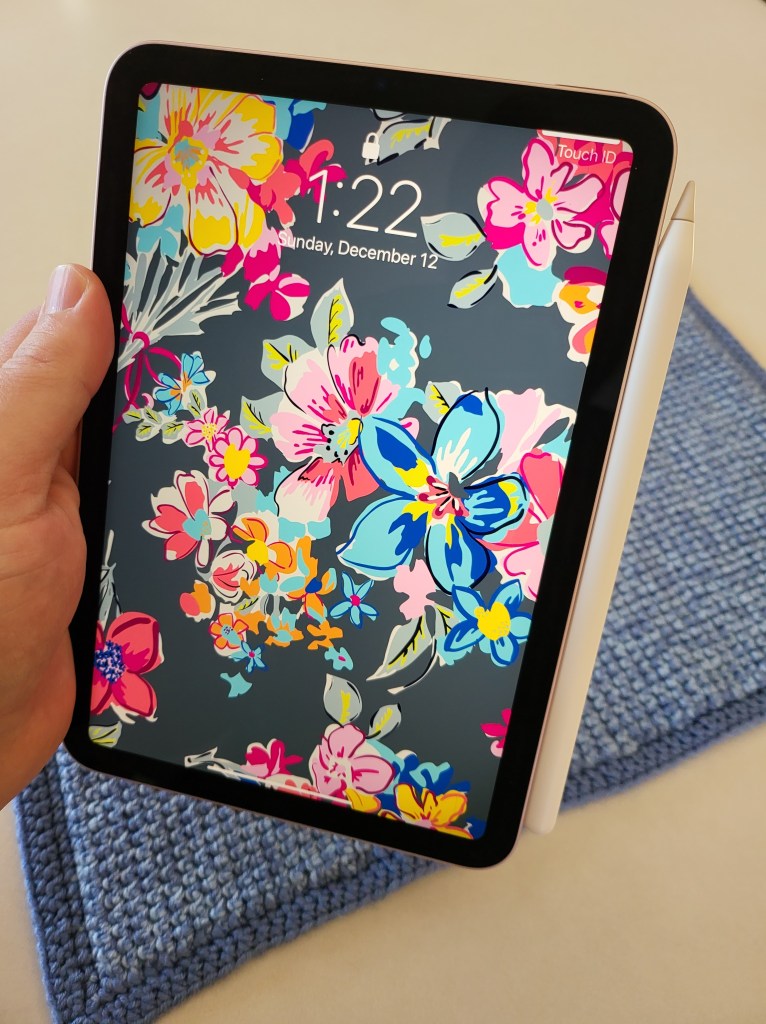
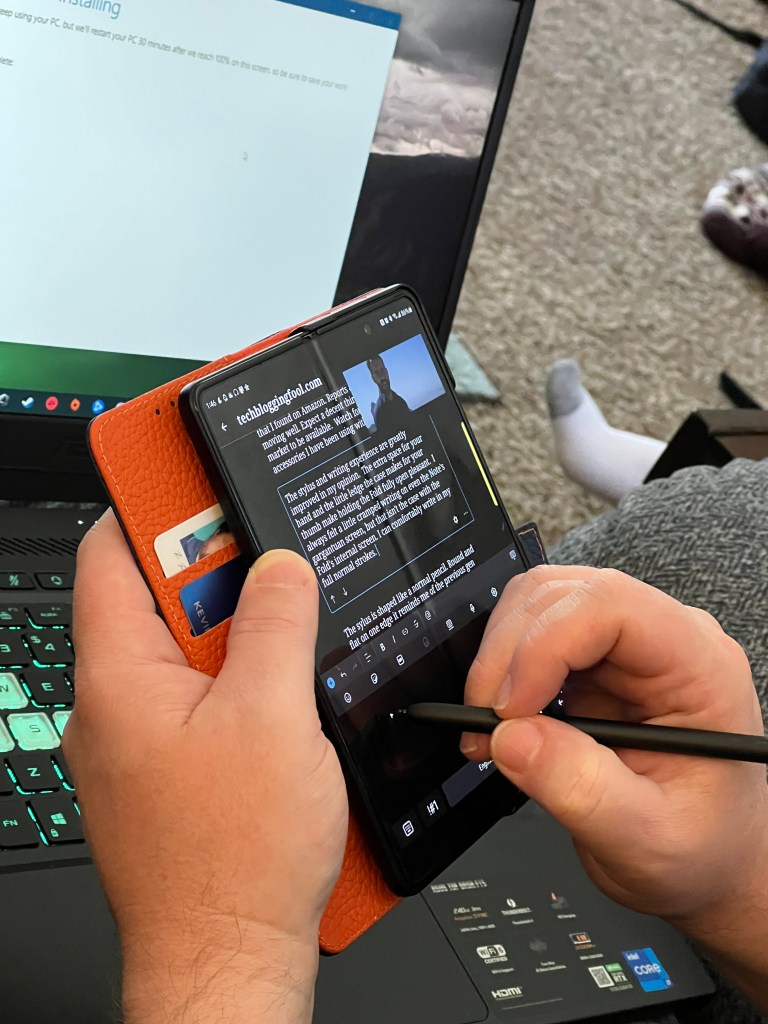
I’ve always thought that the iPad mini was about the perfect size and weight. I have tried one several times, but I struggle to write with Scribble (Apple’s HCR). My Galaxy Fold 3 was a perfect fit for using in relaxed writing positions. The Fold 7 didn’t support an S-Pen, so I skipped it and went with an Ultra phone. Hence my desire for a mini tablet.

I borrowed my spouse’s 6th gen iPad mini to give Scribble another chance recently. I wanted it to work, I really like the form factor and screen.. Scribble has improved. It works great for forms and jotting a few lines. It still feels clunky for my style of handwriting. I have to correct more than I would like.

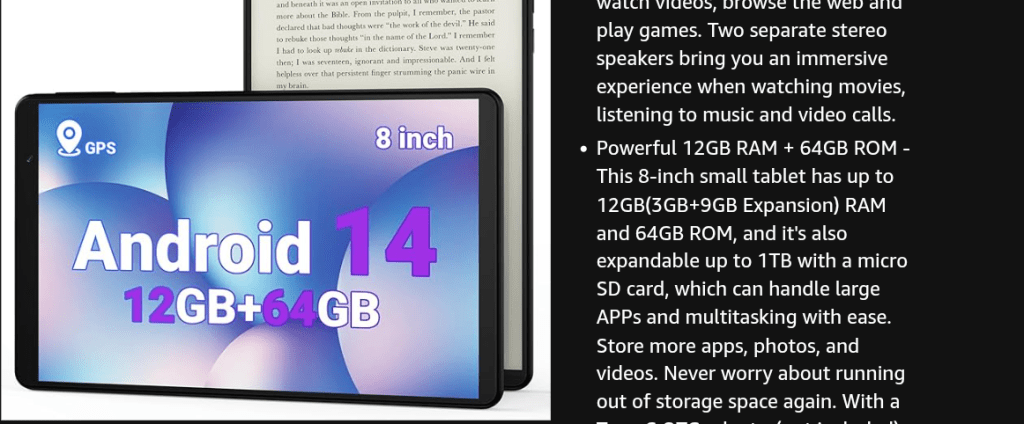
There are more Android based tablets than I expected in the 8-to-9-inch range. I appreciated having choices, but many candidates were under powered and easily ruled out.  Lots of the mini tablets seem to favor a generic octa-core CPU with 4 gigabytes of RAM. I passed on them because HCR takes a lot of computer resources all on its own. Slow recognition makes handwriting a miserable input option for me.

Read the fine print, this generic tablet has 3GB of RAM and a 9GB swap file.

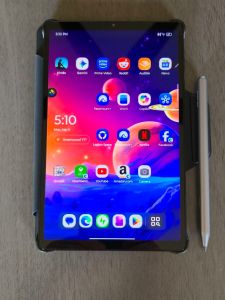
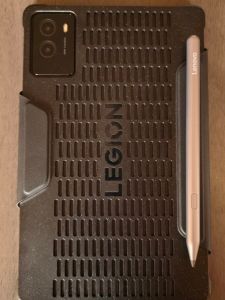
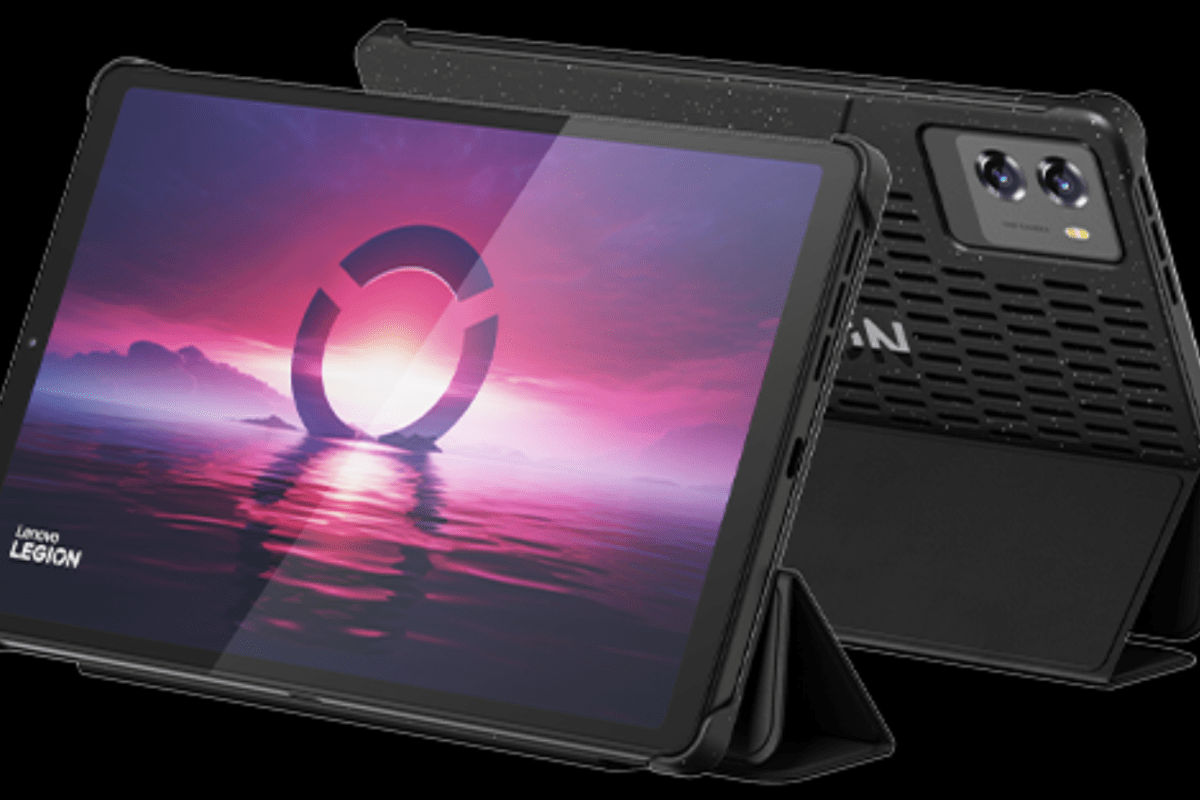
I ordered the Legion Tab from Lenovo’s site. It was on sale for $420.00 with free expedited shipping if you’re a member of their rewards program. Even with the sale, it is on the more expensive side of the mini-tablet market. You get a lot for the price though. It has a late model Snapdragon chip, 12 GB of RAM, a 165 FPS HDR screen, and 256GB of storage capacity. It ships with a 65 watt power brick, a fitted folio case, and high-end screen protector. The active stylus is a $40.00 accessory.

I haven’t used a Lenovo Android device before this. I wasn’t sure what to expect. Lenovo’s fit and finish is top-shelf. The cameras are good enough and include an LED flash. The speakers are the best sounding, loudest speakers, I have heard on any tablet or phone to date. There are two USB-C ports. The bezels are thin and straight. The chip is intentionally positioned far away from where your hands touch the back. The case hovers just above  the tablet’s back surface to further dissipate heat away from your hands.

An unedited photo captured with the Tab’s 13 MP rear camera. All settings are automatic.

Lenovo’s One Vision launcher provides similar functionality as Samsung’s One UI. Most of the features I am used to are present, but some don’t go as deep. For example, One Vision supports themes. The Lenovo app store isn’t available in the United States, so I can’t acquire more.

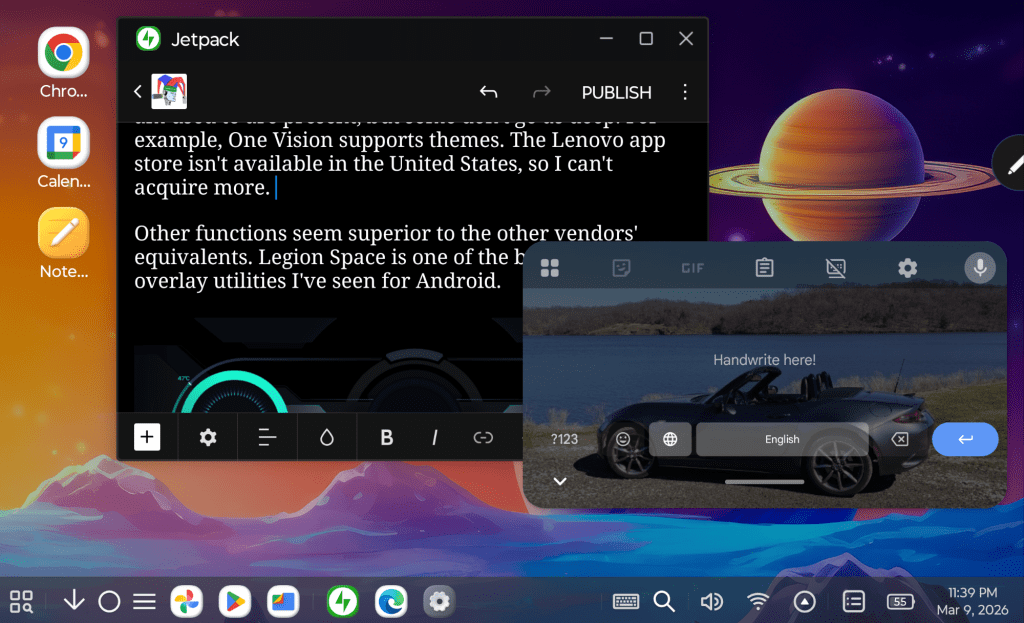
I didn’t realize that Lenovo had a PC Mode on their tablets. If you have ever seen Samsung’s DEX, the idea is similar. In PC Mode everything runs in a floating window. There’s a start button and taskbar, all the hallmarks of a PC operating system are there.

PC Mode is exactly that. Activate it from the quick settings menu.

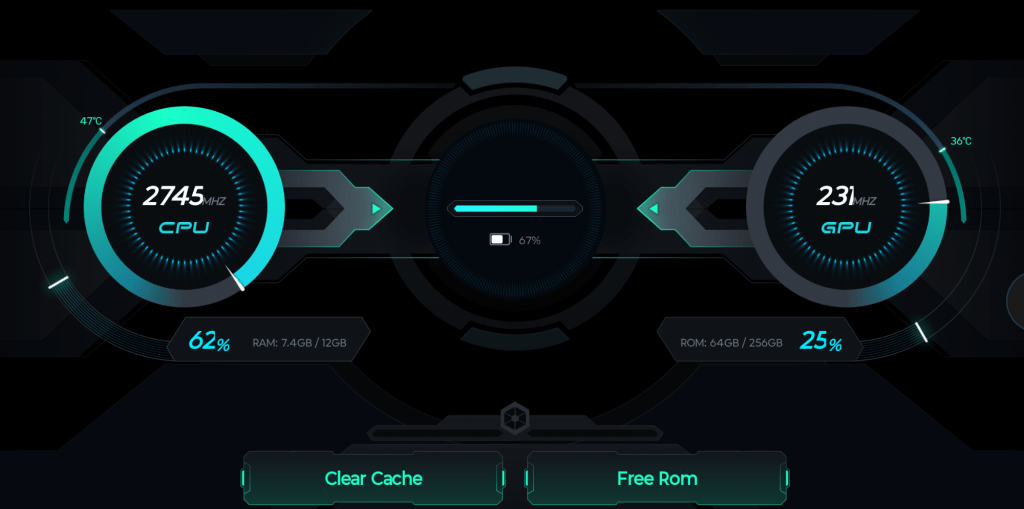
Some of the UI functions seem superior to the other tablet manufacturers’ equivalents. Legion Space is one of the best gaming overlay utilities I’ve seen for Android.

Legion Space is a fantastic game monitor and system utility.

Lenovo opts for GBoard instead of a homegrown keyboard like Samsung does. GBoard is excellent and has the functions I rely on. You can float or split the keys and swiping is available too. The handwriting recognition mode offered by default is in-line and similar to Scribble. I’m adjusting to its quirks and getting better at it every day.

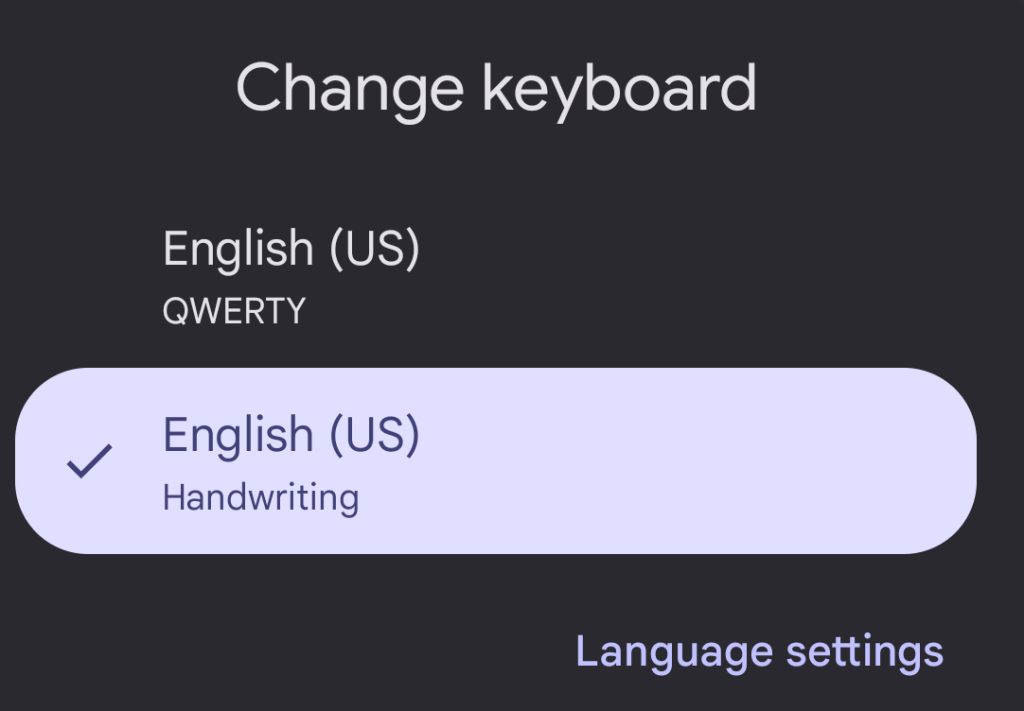
At first, I didn’t realize that I needed to install the English handwriting language option. Without it you can’t access the full writing input panel experience. I’m getting closer to writing at top speed. I’m confident I’ll get there with a little more practice.

By default, the handwriting is in-line only. Install this keyboard from settings to access a full input panel.

The stylus links to the tablet via Bluetooth. It’s USB-C rechargeable. The shape is round, except for the flat edge that it magnetically sticks to the back of the tablet with. The tips are stiffer than an S-Pen’s. The writing instrument glides across the screen smooth and fast like the Apple pencil on an iPad does. It’s well balanced in the hand and features a single button. I’ve written this entire post with it and have enjoyed the experience.

The pen feels great and works well.

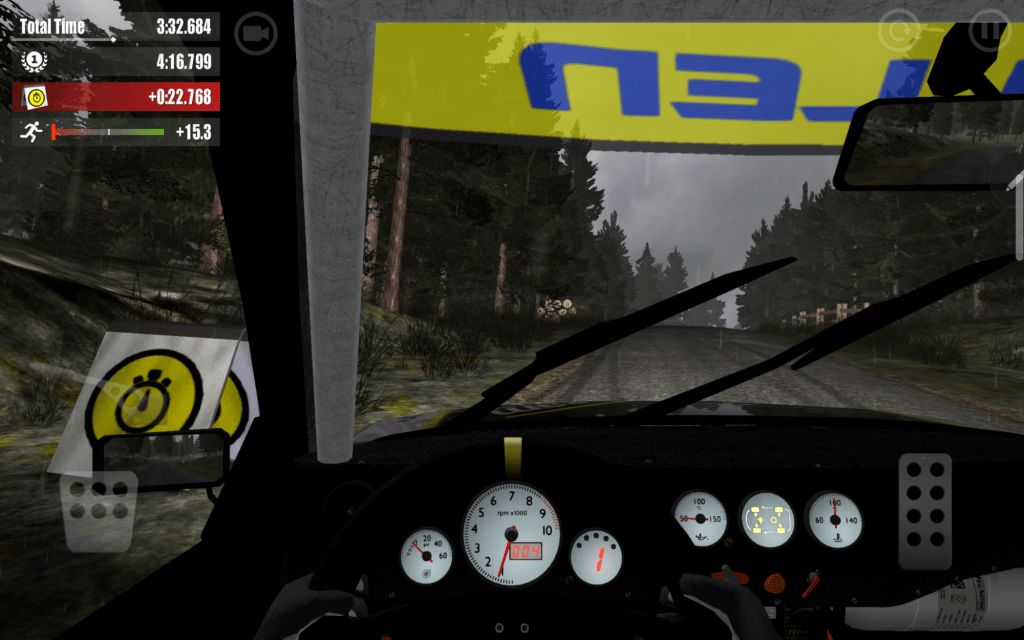
Of course, bearing the Legion moniker in its name means this thing is built for gaming. Let me tell you it doesn’t disappoint. In fact, it is the best experience I’ve had playing on any Android device. Rush Rally 3 runs at 130 FPS in 1440 P ultra. Destiny Rising plays perfectly on Ultra settings too.

Captured in game playing Rush Rally 3

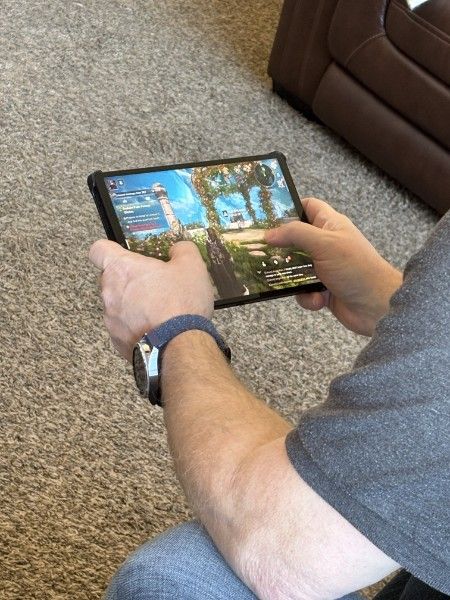
It’s small and light enough to hold while using the on-screen controls. It’s also large and loud enough to use as a tabletop console when paired with a controller. The power, screen refresh rate, and screen size are astonishing compared to a phone, any phone. Legion Space lets you monitor and tweak your settings to squeeze the most out of each game while you are playing.

The Android gaming experience is second to none.

The learning curve going from Samsung to Lenovo has been easier than I expected. Android is Android, but I have had issues when changing device brands in the past. Once I ended up with a tablet that couldn’t access the Google Play store without me resorting to trickery. There’s been none of that this time around. All of my apps, games, and cloud connections work well with the device.

If you have wished somebody would make an Android based iPad mini competitor, Lenovo has granted it. Even improved on it I dare say. The Legion Tab 8.8 Gen 3 has quickly become my favorite device for home use. Now I can sit in my recliner and write for as long as I please without sacrificing comfort or functionality.