I’ve been racing with wheel and pedal sets on PC, Xbox, and Playstation systems for as long as I can remember. I started out with simple spring based wheel and pedal sets from the likes of Mad Catz. Eventually, I worked my way up to advanced force feedback based wheels that use embedded motors to simulate some of the physical experiences of driving.
During my early years with the hobby, I had not devoted much attention to the pedals. I was always more focused on the graphics, wheel, and display. I used the basic gas and brake set that came with the wheel and decided that was good enough.
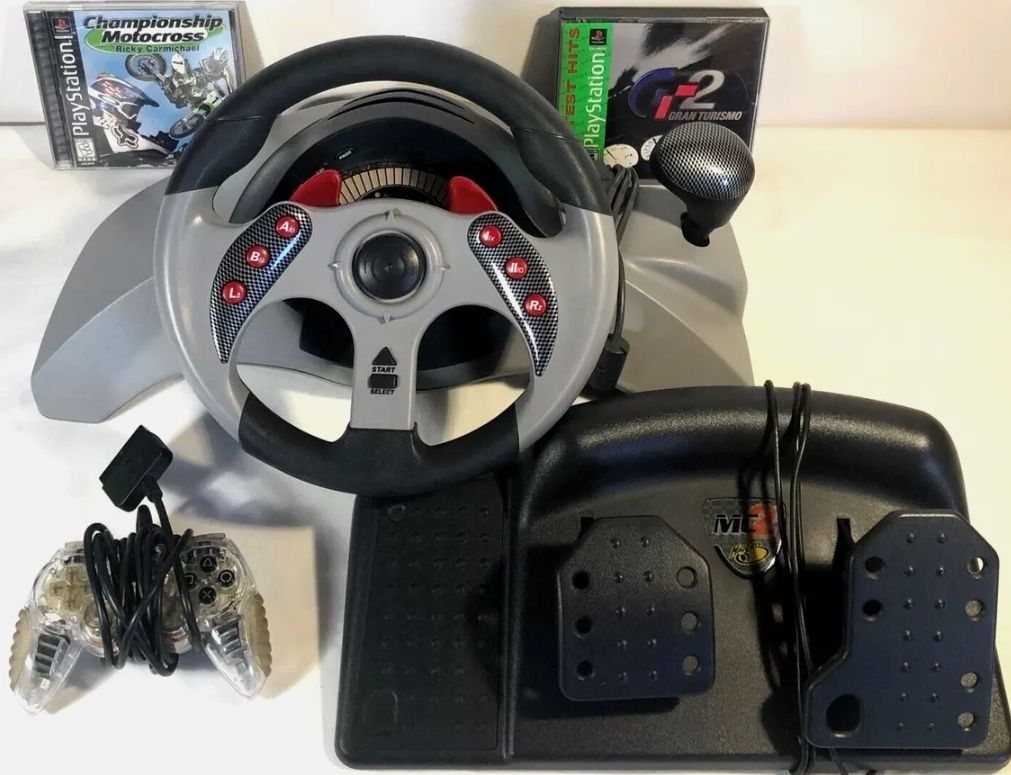
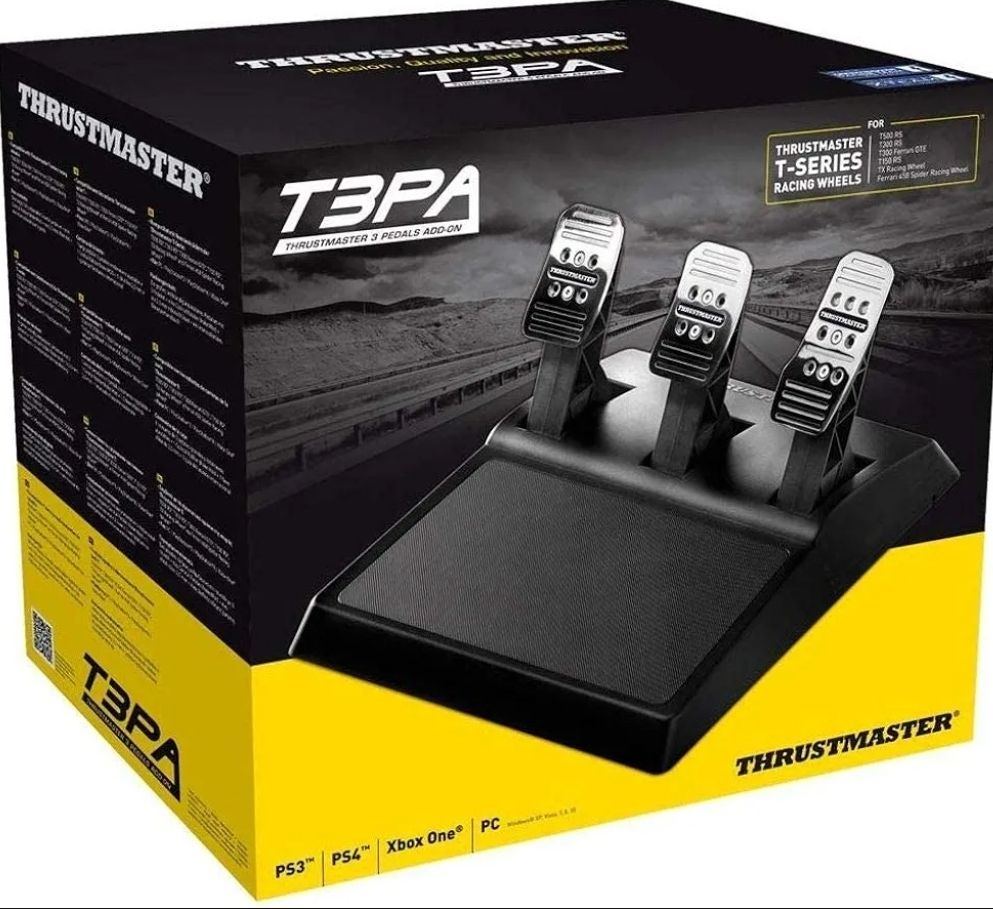
A few years back, the gas pedal snapped on the Logitech setup I had been using at the time. I purchased a set of Thrustmaster T3PA pedals because they used the same connecter. Also, the addition of a clutch pedal would be a big upgrade. I’ve preferred them up over those included with my various wheels ever since. Until recently, that is.
My lovely wife had decided the best Father’s Day gift would be a trip to our local computer and electronics store to pick out a new toy for my inner child. While we were wandering around the store, we eventually found ourselves in the sim-racing section. It was there that I discovered the T-LCM pedal set. It was the first time I had run into loadcell based pedals in a brick-and-mortar store. It was also the first time I had seen the tech offered for less than three hundred dollars.
Loadcell sensors measure the amount of pressure being applied at any given time in near real time. They’re far more accurate and faster than the more common potentiometer sensors. The older tech measures the distance the pedal’s shaft travels, and the software translates that to pedal pressure.
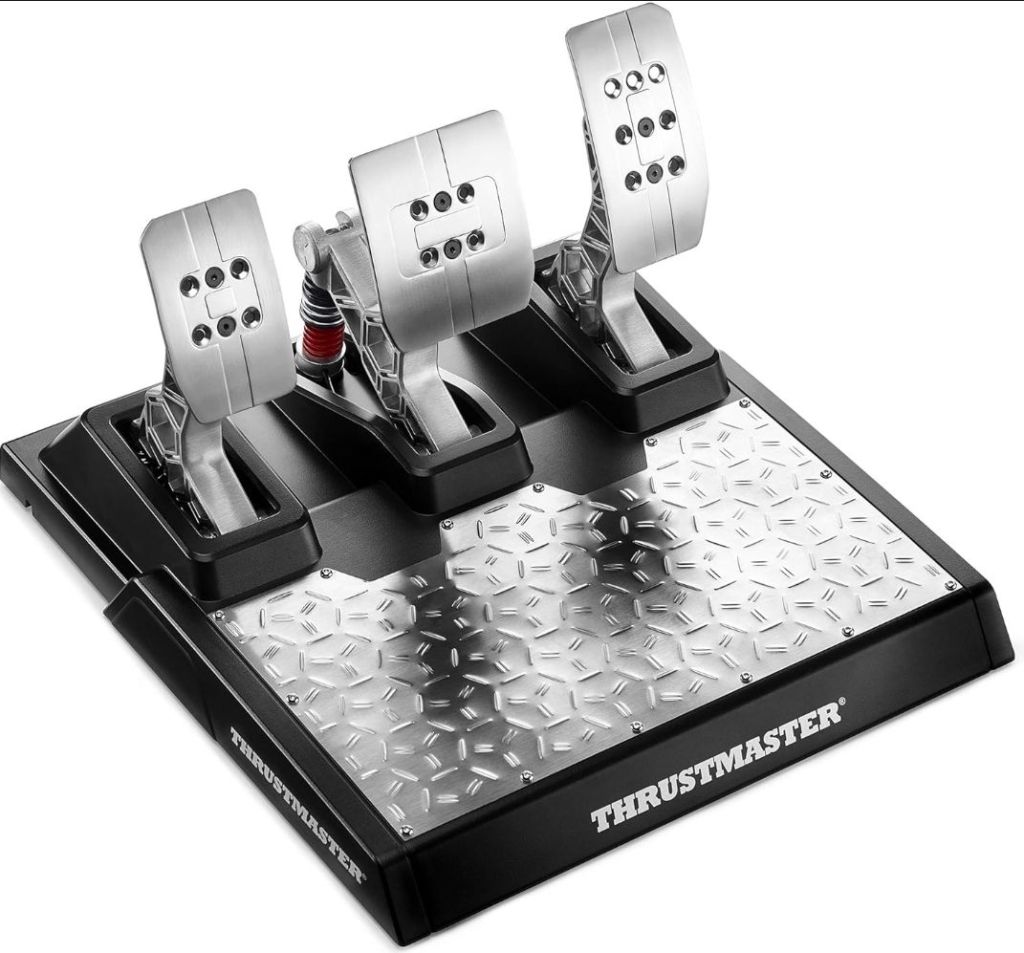
The upgraded censor allows engineers to design pedals that are focused on replicating the real-car experience. Potentiometer based pedal designs are forced to consider shaft travel over other attributes. On the Thrustmaster T-LCM model, the loadcell is utilized by the brake. Combined with some adjustable spring sets, the feeling of braking is closer to meat-space vehicles.
It took me about two hours to get the T3PAs removed and the new set installed and ready to drive. In that time, I updated the firmware on my TS-300 wheel because it was required. The installation steps also included downloading the tuning software to adjust the sensor’s sensitivity . Then, it was on to the hard part mapping the new pedals to the controls of my various driving games.
In each of the driving games I play, there is a particular car and track that I use to test new setups of my computer hardware and software. I loaded one of these benchmarks, Project Cars 2’s Azure Coast in the 2004 Porsche Carrera GT and hit the road.
I could tell by the time I had turned into the first corner that the new load cell technology was worth the cost and time. I won’t go as far as saying that braking feels exactly as it would in any particular car. I will say that it feels like a realistically generic brake system.
The improvement in car control due to the more nuanced feel of the braking was immediate for me. I beat my personal best lap time for the track and car in my first test run. The brake engages and applies stopping power in a manner that is more like the real thing. The adjustable resistance provided by the various spring sets lets you adjust the feeling to match your expectations.
The Microcenter store we had purchased the new set from had them priced at a reasonable $249.00. I happen to know that the store will price-match Amazon, so I checked. Sure enough, Amazon had them for $201.00. At that price I think these make sense as an upgrade to my sim-racing setup. If you’re looking to inch closer to a more realistic driving experience, you might want to check them out too.
 techbloggingfool.com