Six Months in with the Microsoft Surface Go 2

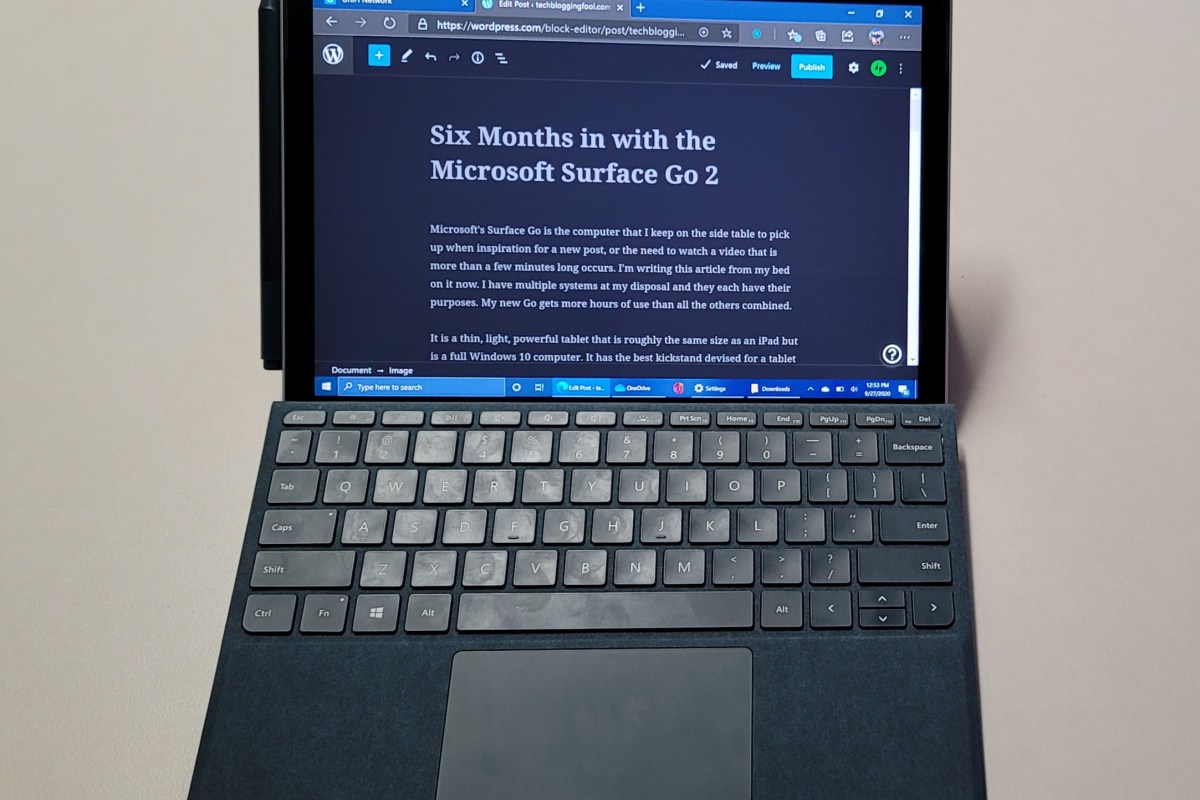
Microsoft’s Surface Go is the computer that I keep on the side table to pick up when inspiration for a new post, or the need to watch a video that is more than a few minutes long occurs. I’m writing this article from my bed on it now. I have multiple systems at my disposal and they each have their purposes. My new Go gets more hours of use than all the others combined.

It is a thin, light, powerful tablet that is roughly the same size as an iPad but is a full Windows 10 computer. It has the best kickstand devised for a tablet so far and an excellent battery. I also have the Surface Pen and the keyboard cover. Microsoft considers these accessories optional and I could live without the keyboard, but you’ll have a better experience if you get them both. Specs are fine and benchmarks can provide important metrics but what really matters is what you can do with a tool in the real world.

Almost every morning before I climb out of bed I grab my Go off the nightstand and check Outlook, Teams, the weather, and my company’s line of business apps to see if there are any emergencies and wrap my head around the day’s work. I don’t have to type any passwords. I just click the power button and the Windows Hello camera recognizes me, even in the darkened room with my crazy bed-head. I pull the pen off it’s magnetic spot and answer or fix anything that requires immediate attention. This is easy because all of the apps are open at once and I’m already on the VPN. If I didn’t hit snooze too many times, I usually check the news before I head to the gym where the Go server as a perfect video screen on the machines.
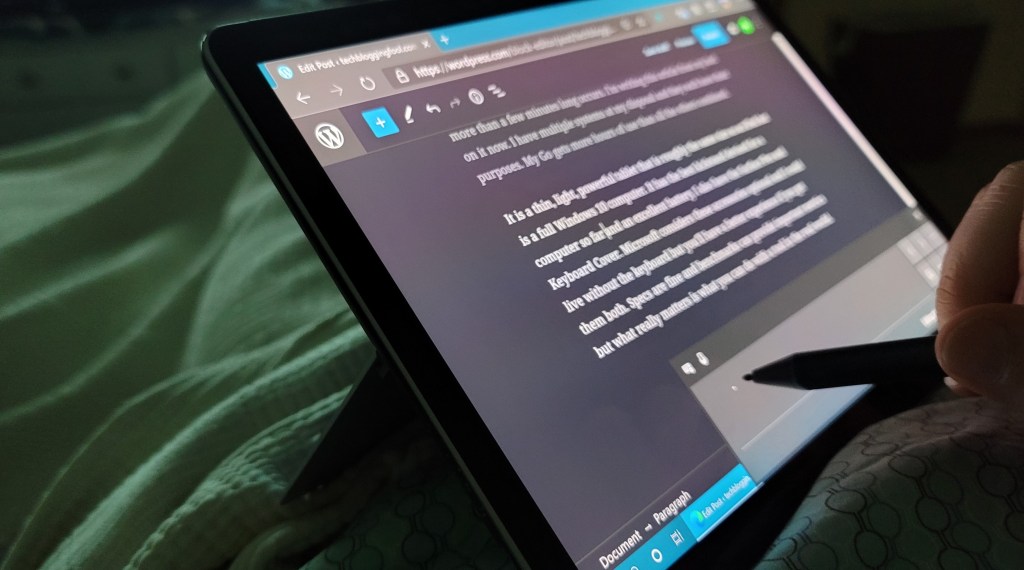
The kickstand makes writing in bed a cinch.

Once I’m at work, the Go becomes my Notebook. OneNote is always open. I’m in countless meetings and conversations with people about important things, there’s no way I would remember all of this stuff. I usually have the screen split between OneNote and one of the video apps that I subscribe to. This thing has great speakers. I also usually have Grapholite running because diagraming applications and networks is often the quickest way to understand them. Truth be told, I have done all of my work from the Go when the need arises. I have all of my utilities, printers, connections, and data available. My USB C dock and charger let me use the Go as a full workstation when I need to.
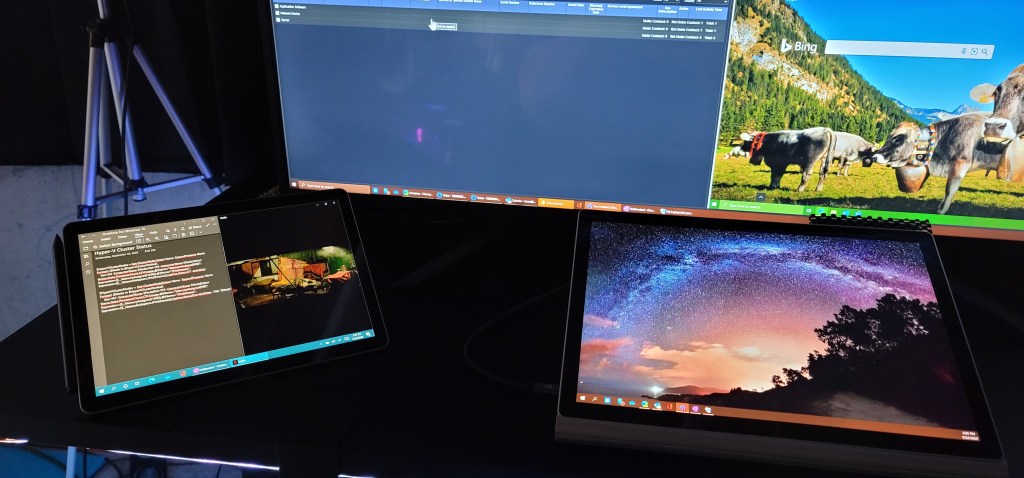
The Surface Go is a perfect side-kick system.

After work I usually sit in my favorite chair and watch Netflix in a small window that I mark to always stay on top. That kickstand comes into play again. The little Surface will balance on the arm of my recliner right under my writing hand and is so ridiculously comfortable. I check social media, message my friends and family, and work on my blog. Because I’m signed into Xbox live, Steam, BattleNet, and Origin I can see if any of my friends are up for a game.
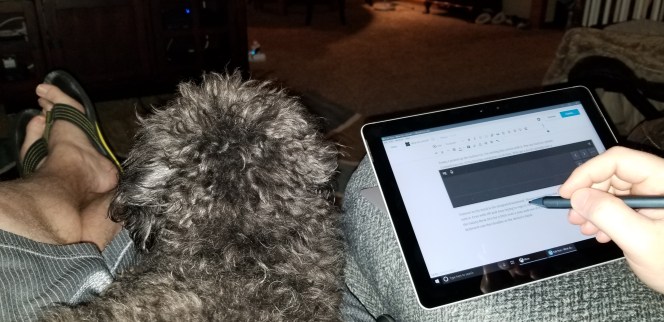
The kickstand is key to the Go’s versatility.

Teams video meetings, Zoom meetings, Web-ex, and GoTo Meetings oh my; I’ve used my Surface Go 2 in all of them. Have you tried to split-screen Zoom on an iPad yet? The video drops as soon as the app isn’t filling then entire screen. It is fairly amusing when people try to do something else during a meeting and can’t figure out what happened. Even the one-thousand plus dollar iPad Pro can’t support multiple users or multitasking during a video call. The $399.00 Surface Go does both with ease.

The Surface Go 2 has a slightly larger screen at ten and a half inches versus the first generation’s ten inch panel. The second gen Go also features a faster processor, larger battery, WiFi 6, and Bluetooth 5.0. If you already own a first generation tablet the upgrades are not going to blow you away, but they are notable in everyday use. The first time around I went with eight gigs of ram and one-hundred twenty-eight gigabytes of storage. Now that cloud storage and SD cards are more affordable, I chose four gigabytes of RAM and sixty-four gigs of storage. There haven’t been any ill effects of that decision so far.

The Surface Go 2 is perfect for writers, students, meetings, and armchair engineers. I would have loved to have something like this in my college days. My backpack would have been much lighter. As an IT worker it is invaluable to have all of my tools everywhere I am. If you travel and find yourself packing a laptop and iPad this will cut your load in half. If your point-of-sale platform runs on Windows, the Go would let your floor employees access it without re-tooling for Android or iOS. Who couldn’t find a use for a powerful Windows computer that is smaller and weighs less than an average magazine?
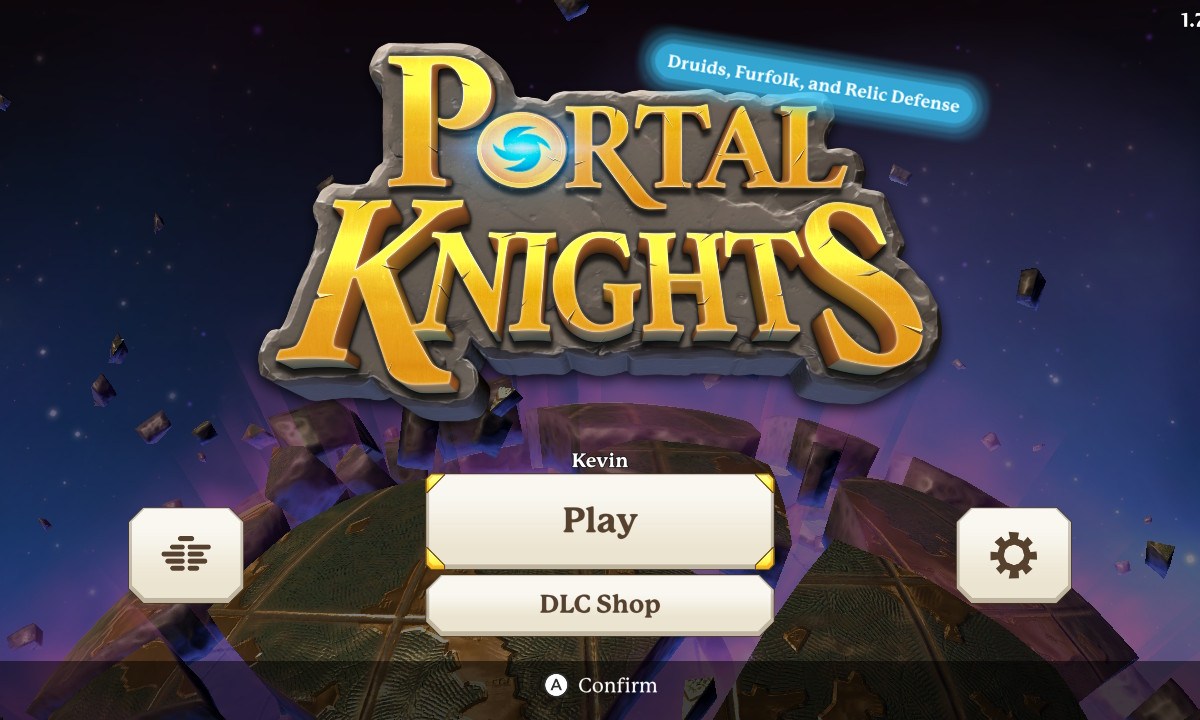

Portal Knights A Great Co-Op Game for Couples

My wife and I are both gamers, but we prefer different genres. She enjoys farming, life simulation, and collecting, with some adventure and task completion tossed in to keep things moving. Some of her favorite games are Animal Crossing, The Sims, Harvest Moon, Zelda, and Skyrim. My tastes tend to fall more on the shooter, racing, and action adventure side of things. Some of my favorites are Destiny 2, Call of Duty, Tomb Raider, and Zelda.

We like to play together but our differences make finding a game that we both enjoy challenging. I find Animal Crossing boring and she thinks Call of Duty is a loud obnoxious mess. The last co-op games we played were the Harry Potter Lego series. We have fooled around with Captain Toad’s Treasure Tracker. Its puzzles are intriguing, but it is low in entertainment value.

The Harry Potter Lego games are also excellent fun for couples.

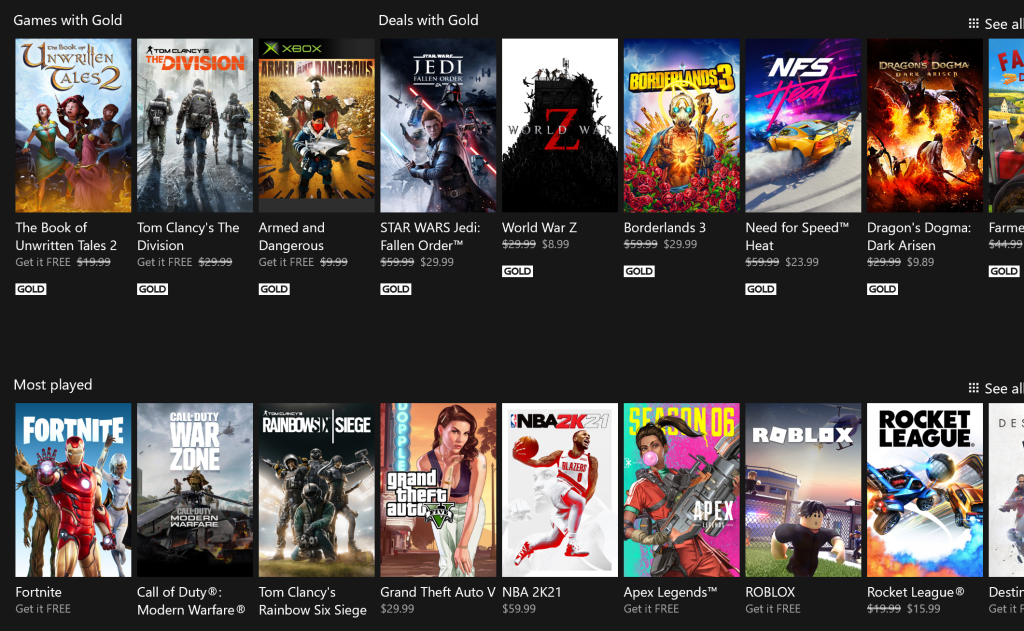
I was exploring the games made available by the Xbox Game Pass and Games with Gold when I stumbled upon Portal Knights. We decided to try it out in split-screen and purchase a copy for our separate devices if we liked the game because co-op is fine, but sharing is too much to ask for any married couple. Portal Knights is available on the Xbox, PlayStation, Switch, PC, Android, and iOS.

Between Xbox Games with Gold and the Xbox Ultimate Pass a new game is a click away.

We played through the intro and enough of the game to see that we would keep playing. Then we each purchased the bundle that included all the DLC for our Switches. The game works fine in split-screen. We specifically wanted a game we could play when the TV was unavailable.

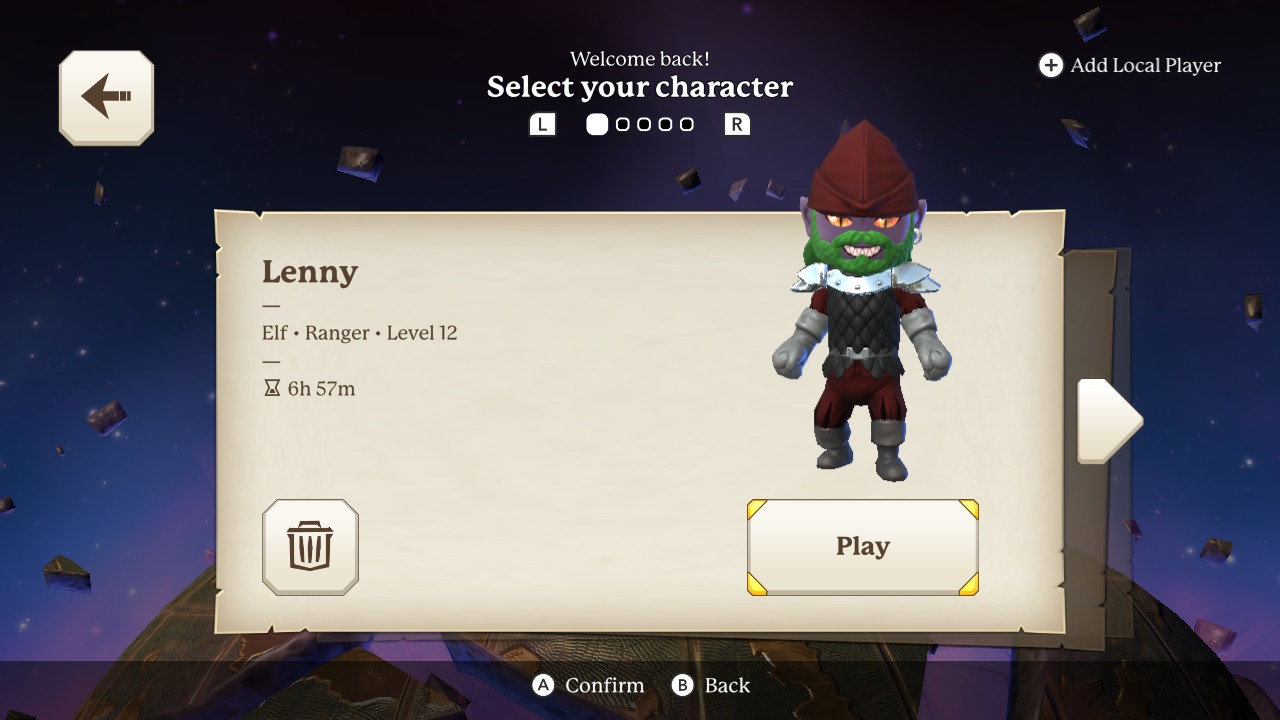
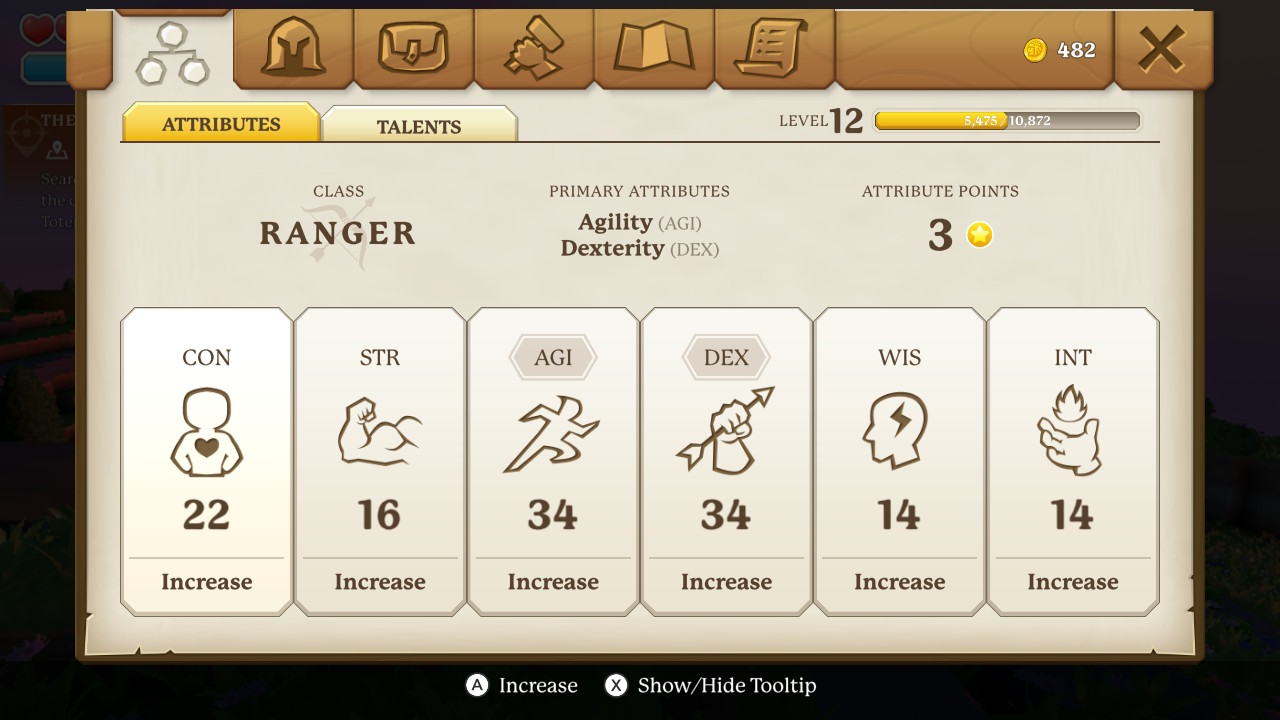
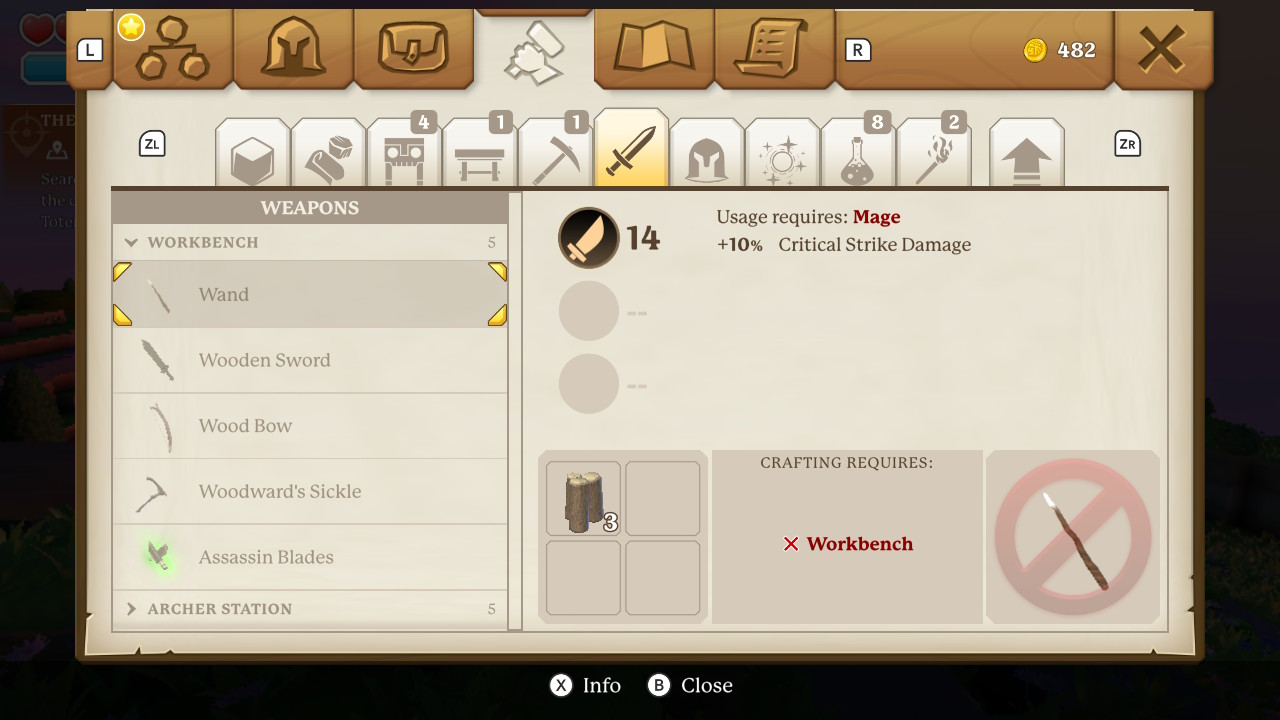
What is Portal Knights? I think the best way to categorize the game is to call it a compilation. It starts off with your standard RPG character creation. Choose your class, edit your looks, and pick your skills. In the base game there are three classes. The bundle or, DLC adds two more. The lady went mage, and I chose a bow wielding scout. There is an excellent array of choices to make your avatar personal.

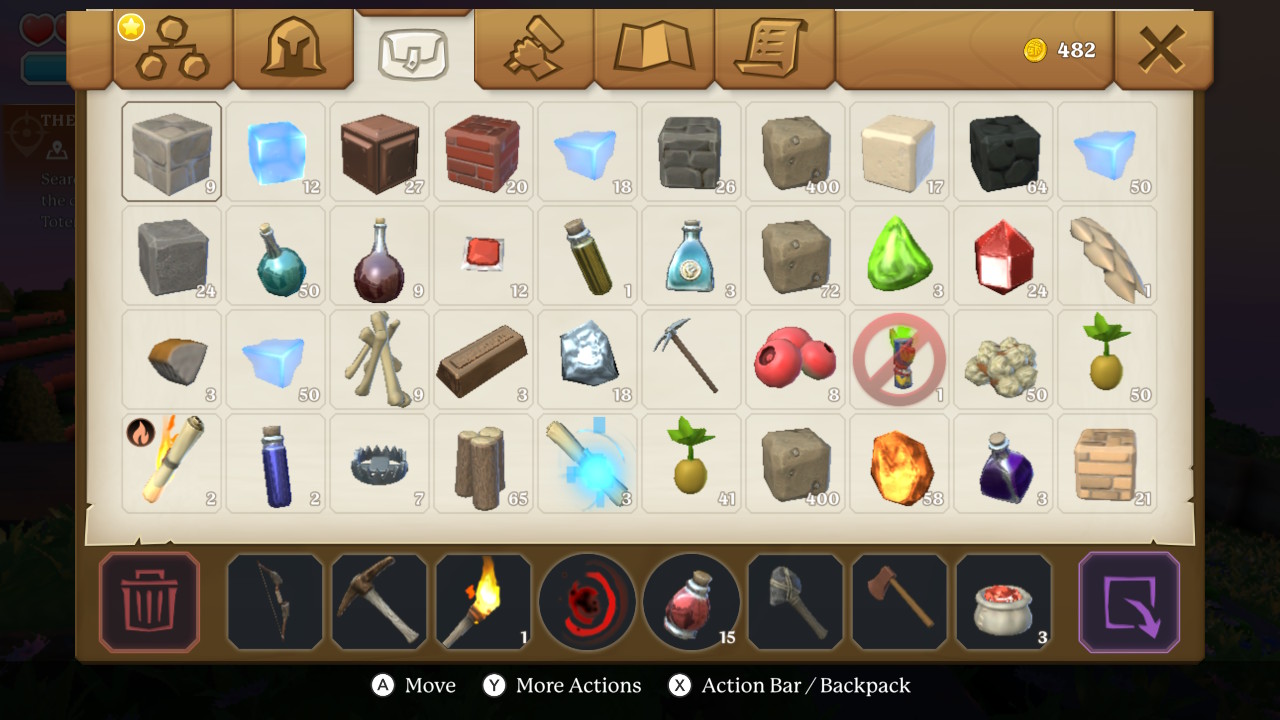
The worlds your characters have their adventure in are created randomly a` la Minecraft. Speaking of the block-based juggernaut, Portal Knights borrows more than just the random world generation. The blocky feeling is present as are mining for resources, building, recipes, different types of work benches, and the need for shelter. You will be digging up dirt, stone, metals, jewels, various plant materials and more to fill your inventory with the stuff you need to upgrade your tools and rank up. There are also creative mode worlds with no combat or questing.

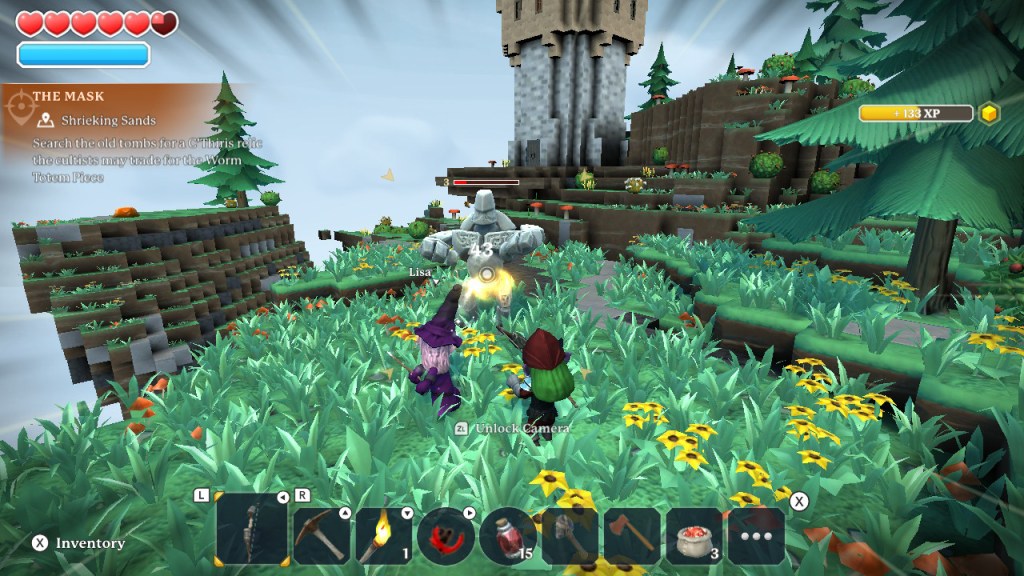
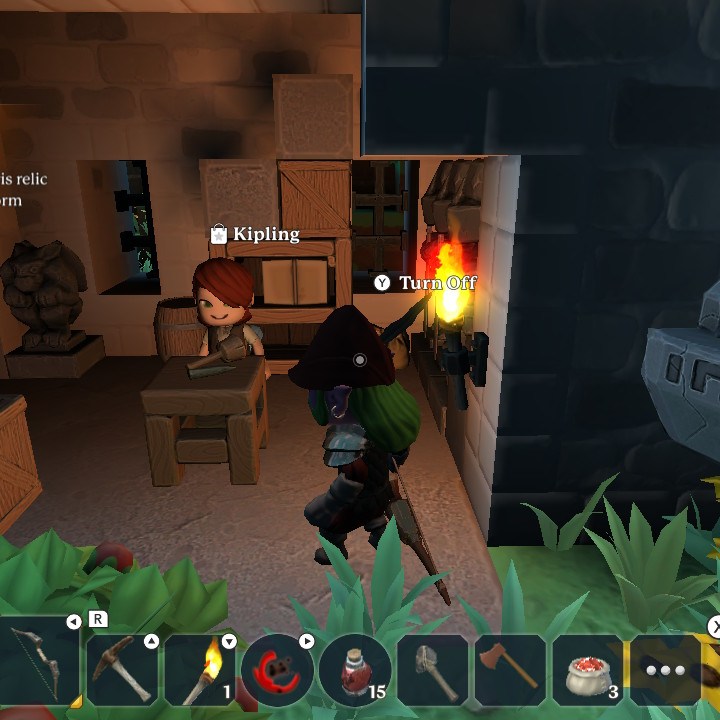
In adventure mode, some of the resources you’ll need can only be acquired in combat. The combat is third or first person, you can switch at will, and ranges from easy to intense. There are many unique enemies that each have their own weaknesses. Armored knights, flying critters, shelled turtle creatures, and giant boss fights with everything from squid to dragons keep the action exciting. Your chosen class of warrior does not preclude you from using the other types of weapons if you build or pick them up. My bowman is quite adept with a sword when he needs to be. There are potions, shields, spells, scrolls, magic items, and other RPG items to be deployed against your foes.

Win battles faster when you team up.

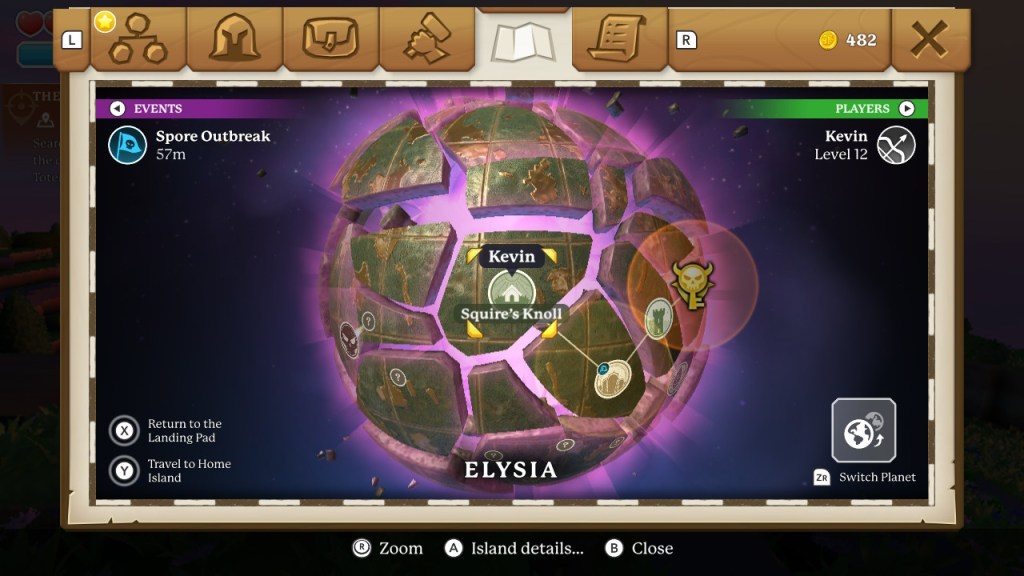
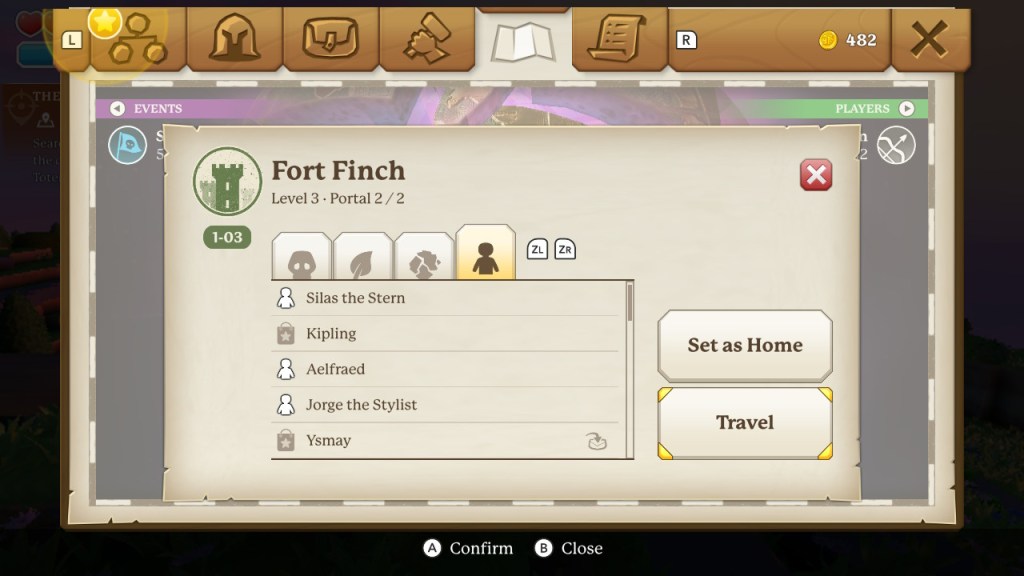
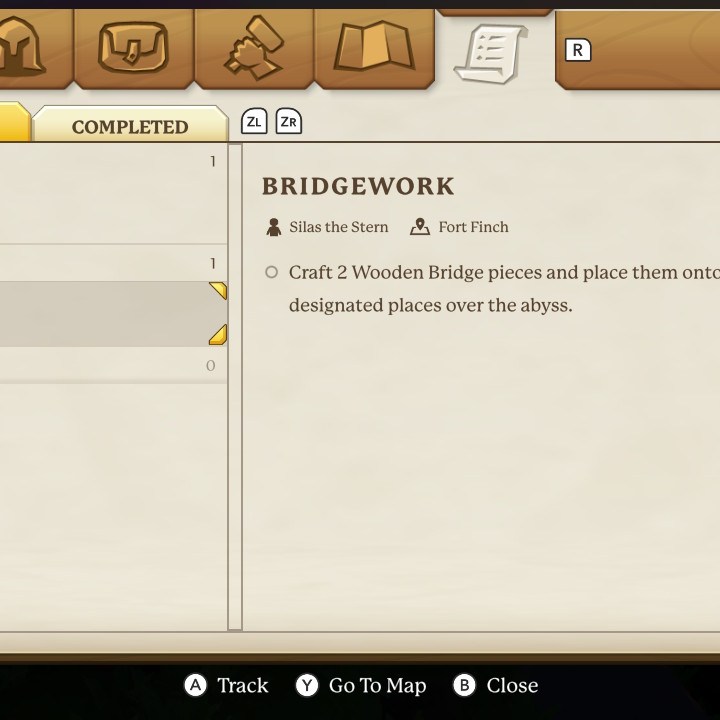
The game takes place on multiple islands that are spread across multiple planets. Each island is centered around particular resources and inhabited by various characters some of whom will ask you to complete certain tasks or quests to move the story forward. You mine in part to obtain colored magic stones that allow you to complete portals that jump you to other islands and planets so that you can complete more of the story.

There are numerous locations.
Your map shows where characters and resources can be found.

What makes the game a great co-op experience is the blend of RPG, combat, adventure, mining, farming, and building. There’s something you will enjoy doing no matter what type of gamer you are. A good balance of open-world exploration and quest driven tasks keeps you and your partner from floundering about without a clue, while still allowing you to wander. Some of the characters are cute and entertaining while others are nefarious and clearly need to be vanquished. The game tries to have a little of everything in it and does a respectable job of balancing it all. It plays especially well on the Switch due to the combination of physical controls for your character and touch for the numerous menus. My wife and I are about twenty hours in and still going strong.

PowerShell Hyper-V Cluster VM Status

As an employee of an MSP, I am often tossed into the ring, so to speak. I’ve found that configuring Microsoft’s tools to see all of the virtual machines in a clustered Hyper-V environment consumes too much time in high-pressure situations. Depending on the version of Windows the hosts are running, you may not see the information you’re after, even when you take the time to set them up.

To save time and see the info most admins need I’ve come up with the simple script below. Run it from one of the clustered hosts and it will pop up a sortable, searchable, grid view for each host in the cluster. You will see the name, number of CPUs, assigned memory, IP addresses, on / off status, and uptime for each of the host’s VMs at a glance. Each pop-up table will be named for the host it represents.

$HyperVClusterNodes = Get-ClusterNode|Select Name -ExpandProperty Name
Foreach ($Node in $HyperVClusterNodes){
    Get-VM -ComputerName $Node|Get-VM -ComputerName $Node|Select Name,State,ProcessorCount,CPUUsage,@{Name="MemoryAssigned(MB)"; Expression={$_.MemoryAssigned/1MB}},@{Name="IPAddresses"; Expression={$_.NetworkAdapters.IPAddresses}},Uptime,Status|Out-GridView -Title "$Node"}

Improve Your Password Changing Practices

Back in the day, your network credentials were used to logon to your computer, get to your email server, and maybe to access some files or a printer. When you changed your password, if you changed it at all, it made sense to update it on the two or three systems that used it all at once and get it over with.

Now your password is synchronized to untold numbers of cloud platforms, on-premises application servers, VPNs, companion devices, and remote access solutions. Your password authenticates you to your computer and thanks to single sign on (SSO) it also logs you in to Zoom, Microsoft 365, your phone, and Salesforce. Single sign on usually involves an agent application that runs on your company directory servers and updates the other systems when a change is made to your account.

If you are like me you probably dread password change day and want to get it over with as quickly as possible. So you update your computer password when you are prompted and then preemptively logon to your other devices and apps and change them too. It seems prudent to update it everywhere, but our modern cloud connected networks are complicated. The agents that synchronize your password often encounter unresolvable conflicts between your company directory and the passwords that you manually updated. You may end up not being able to logon or lock-out your account.

I have a better experience and am less likely to end up calling the help desk when I wait for the sync agents to do their work. The next time that you are prompted to change your password try this. Only change it on the system that asked. Then wait for the other devices and software to require your new credentials. Some may take days, others may never ask.

Like the infamous CTRL+ALT+DEL, naming the alphanumeric strings we make up to authenticate our identities to our digital systems “passwords” was a mistake made long ago. It causes so much frustration to think of a single word that complies with the complexity requirements that many of us feel like we are losing at Scrabble. It’s no wonder that we forget them the next day. Here’s a tip, use phases like the lyrics from your favorite songs or quotes from movies. They are easier to remember and are actually more secure. Most password fields will allow at least 254 characters.

Fixed Frequent UniFi Wireless Disconnects

My network is based on Ubiquiti’s Unifi platform. I’m on my second generation of the equipment and have been very satisfied with it overall. Normally it just does its job and disappears into the background. So you can imagine my frustration when multiple devices started randomly flapping. My Oculus Quest would disconnect and reconnect mid-game. My wife’s iPad and kids laptops did the same.

Nailing down the cause was troublesome. I couldn’t find a pattern or common denominator to drill in on. No changes coincided with the onset and all the software and firmware were up to date. The event logs on the controller and devices recorded the disconnects but didn’t show a reason.

I spent a few hours working through Ubiquiti’s excellent support material. Specifically this document https://help.ui.com/hc/en-us/articles/221029967-UniFi-Troubleshooting-Connectivity-Issues#intermitten. Unfortunately, it didn’t directly lead to a resolution.

I had installed Wireshark as part of the troubleshooting process and left a capture running while I used my laptop. Eventually the issue occurred and I was able to see in the trace that the RESET packet was coming from the AP that I was connected to. It was intentionally disconnecting my client. Thinking about this logically jogged my memory.

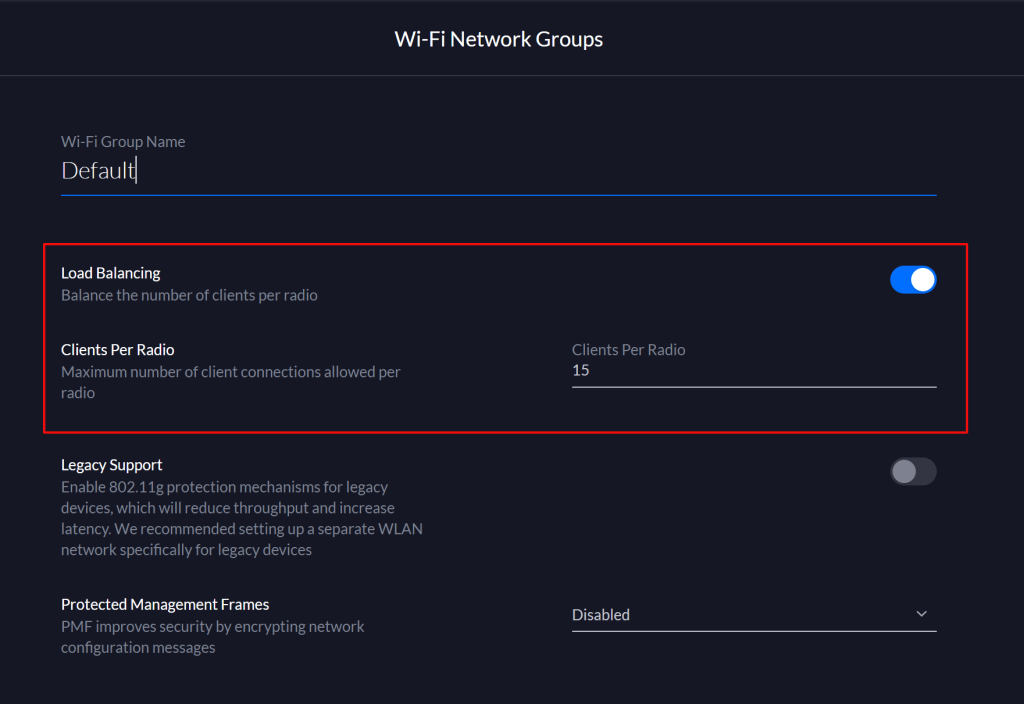
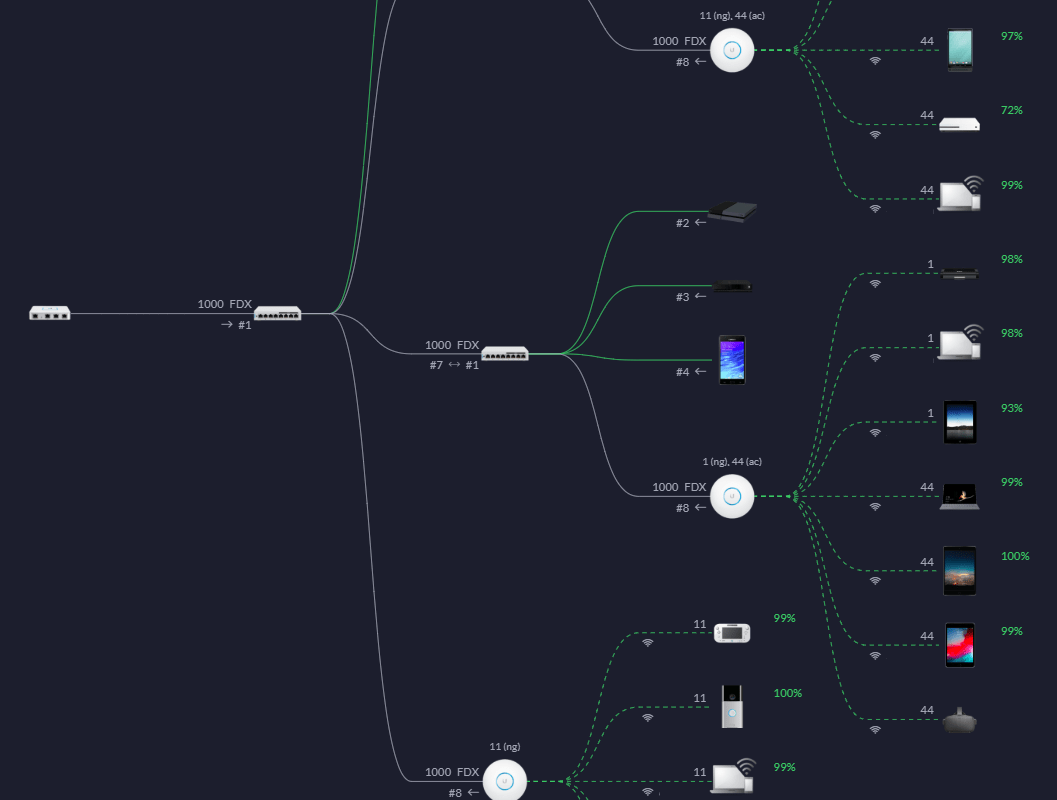
The UniFi system has a load balancing feature that can be used to control the number of clients connected to each access point. I checked and mine was set to five devices. I have more than thirty connected devices at any given time and three radios. The system was disconnecting and attempting to move clients too frequently trying to satisfy the load balancing setting. I bumped the limit up to fifteen devices and haven’t had the problem since. Not only that, but my wireless devices are actually being balanced across the available radios again.

Clients per radio should be a quotient of active devices.

MPOW X3, Can you Get Good Active Noise Cancelling Earbuds for Sixty Dollars?

I have had some very disappointing experiences with true wireless earbuds. On the one hand, I love the freedom afforded by the utter lack of cables. On the other, the dropouts and lagging are unbearable. As an early adopter I am rather used to tolerating glitches and bugs, but I draw the line at my music bombing out mid-groove.

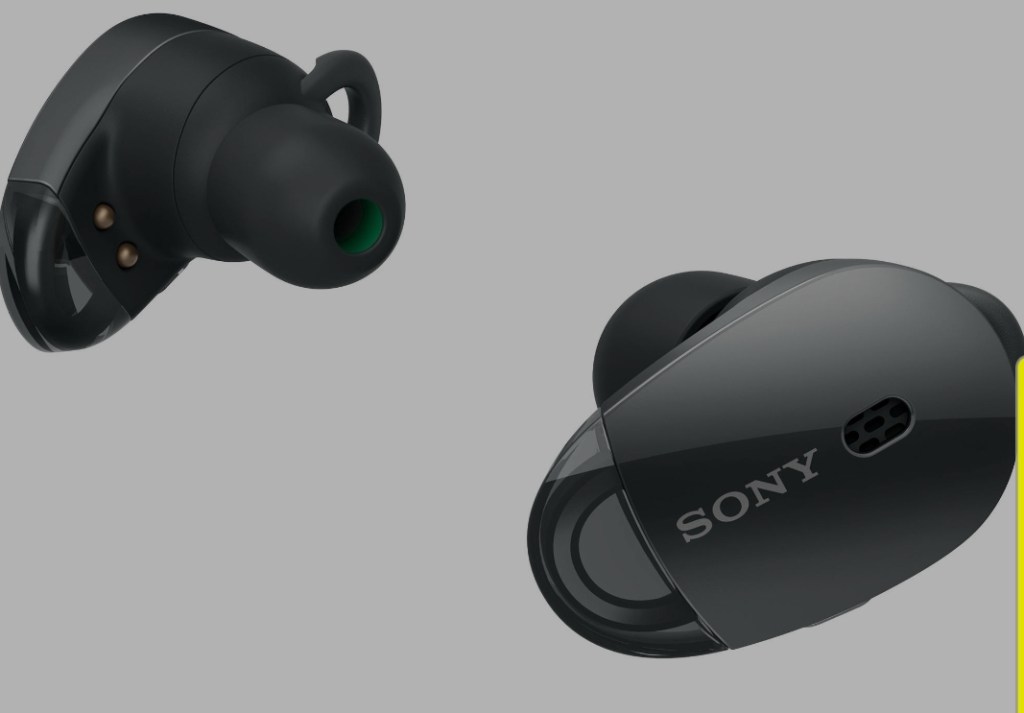
It wasn’t like my first go around with true wireless earbuds were a discount model. The Sony WF1000X were widely considered to be the best on the market at the time. After countless software and firmware updates I finally gave up. They live in the bottom of my junk drawer now.

Sounded great but wouldn’t stay connected.

My wife’s love affair with her Airpods has made me insanely jealous. They pretty much always work. Recently my kid purchased the Airpod Pro set. I liked them so much that I was considering getting a pair of my own and dealing with their limitations when paired to an Android phone.

Before I crossed the streams, I decided to research the current generation of non-Apple offerings. The successors to my Sony WF1000X, the WF-1000XM3 are very highly rated, but given my frustrations I wasn’t prepared to take the chance on Sony again. The new Amazon Echo pair looked promising and were in my cart.

Before checking-out I was reviewing one last article and it mentioned a brand I had never heard of before. The author had been surprised by the inexpensive MPOW X3 earbuds. I looked up a couple more reviews of them and decided to pull the trigger. For a quarter of the cost of Airpod Pros and half the Echo’s price, they were worth a try.

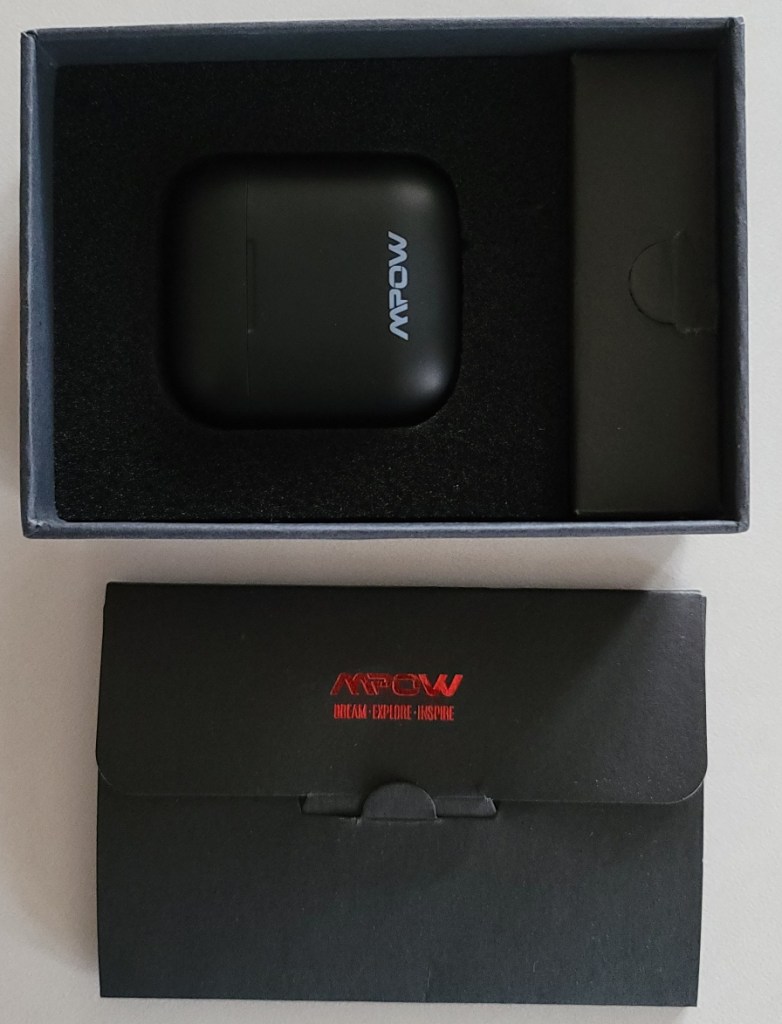
The packaging was nice even though I expected a white box at this price.

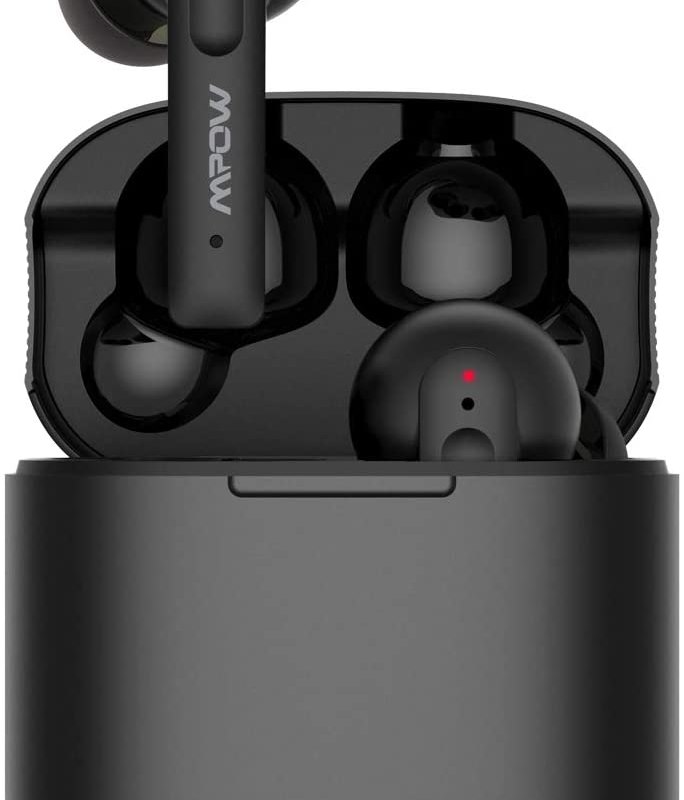
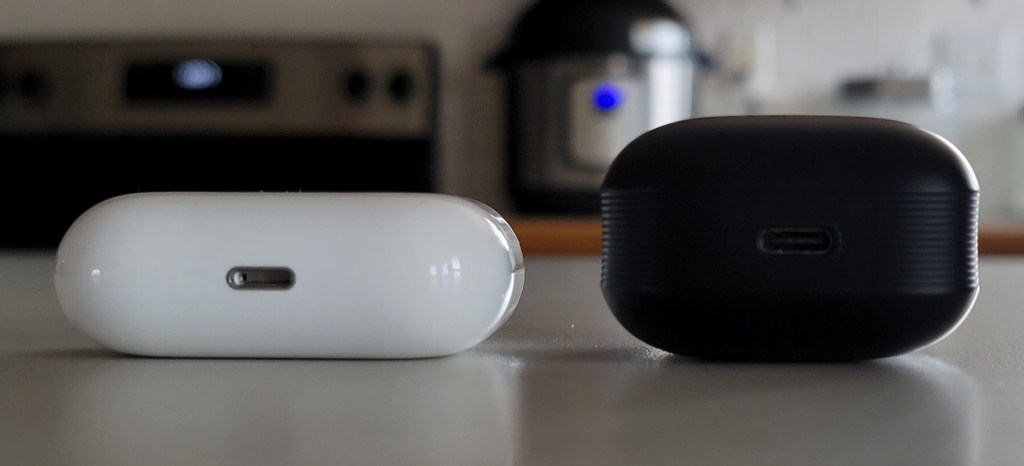
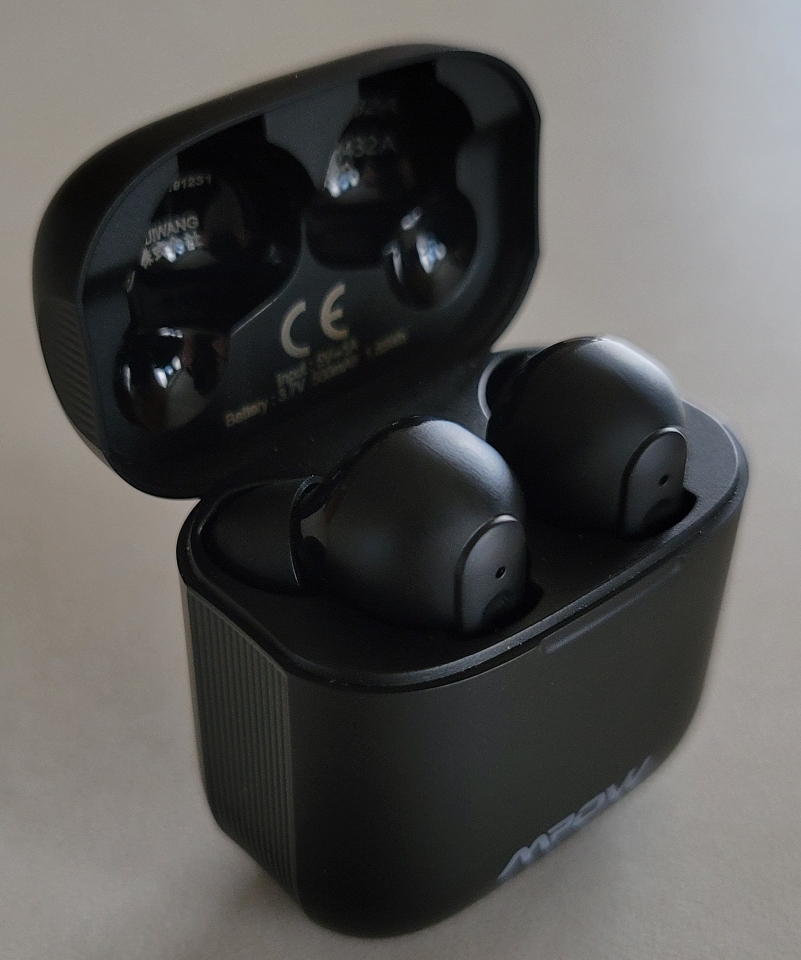
The charging case is a direct rip off of Apple’s, but a little narrower and thicker. The corners are rounded but not tapered and as a result the MPOW case is more noticeable against your leg while it is in your front pocket. It has nice grip grooves that run up the side and the lid snaps shut with a satisfying click. It is held closed with a magnet that doesn’t seem as strong as the one on the Airpod’s case, but it does the job just fine.

The MPOW case takes up less room but is more noticable in your pocket.

The earbuds themselves will also look familiar to Apple fans, all though the MPOWs are black. They are shaped to twist lock into your ear. You start with the stems pointed straight down and then rotate them toward your chin until they snug up. It feels a little odd the first time, but works really well. The buds stay put on the treadmill and on the street. Speaking of working out, these earbuds are IPX8 rated and should hold up to sweat with ease.

My problem with the Sony WF1000X was the drop outs. They would never stay connected consistently. Even with my phone sitting on my desk a couple of feet away, one side or the other would drop out in the middle of my music. The MPOWs have never done this. Not even once. Yesterday while cleaning the house I was working in a bedroom and had left my phone in the kitchen. It took me a bit to realize I was a good twenty-five feet and several walls away but my music was still sounding great. There is no noticeable lag when watching Netflix, Amazon Video, HBO Max, or YouTube. I did pick up on a very slight (fraction of a second) lag while playing CoD mobile but it is minor enough to live with.

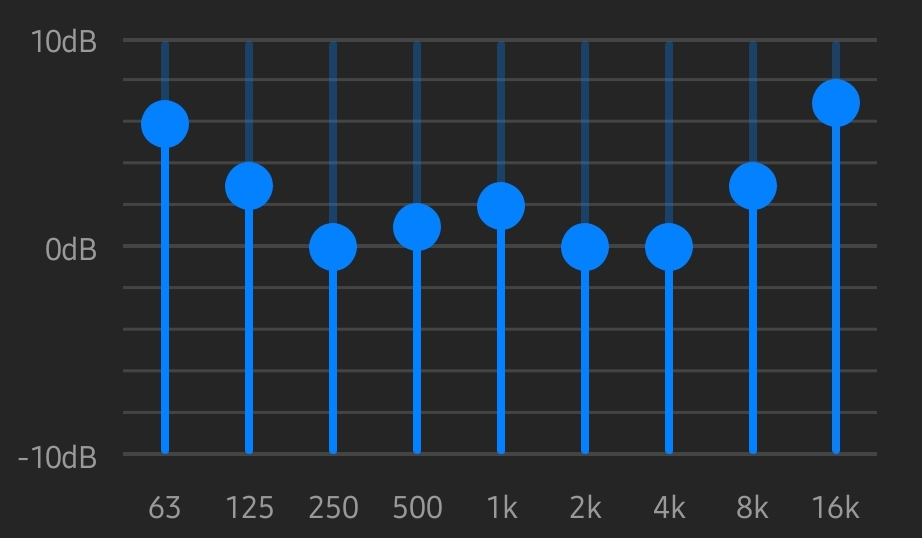
The MPOWs have an impressive sound profile. The bass is punchy and the highs are clear. Once I tuned my phone’s EQ to my preferences I was surprised by how much I enjoyed just listening to them.

Not all Android devices can apply EQ prefferences to Bluetooth Audio.

The active noise canceling is not perfect but is more effective than I expected. I stood outside next to my air conditioner and fired up a podcast at low-mid volume with ANC off. I could barley make out the words over the fan’s hum. I touched the right earbud to enable ANC and the experience flipped. I could barely hear the fan. It doesn’t make external noise disappear, it lowers the interference so that the audio you are playing comes through clearly.

I’ve used them on a couple of Teams and Zoom calls as well as in multiple phone calls. They have mic noise cancelling as well as ANC and it works. They won’t be my go to for calls and meetings but, if I already have them in I won’t be nervous to answer. You can use the right earbud as a standalone headset, just put the left one back in the case.

Just for good measure I paired them with my Surface Book, Surface Go, an iPhone, and an iPad. They worked and sounded fine with all of them. The earbuds go into pairing mode each time you remove them from the case and try to automatically connect to last device you were using them with. They are not multi-device capable, no true wireless headsets are yet. The device switching doesn’t work all that well in my opinion, even the Airpod Pros struggle here. I’ll leave mine paired to my mobile and call it good.

They feel premium in your hands and ears.

There’s no wireless charging and they don’t support aptX but neither of these features mattered much to me. I like that they are USB-C because who wants to carry more cables? They’ve earned a place in my pocket, I don’t leave home without them. If you’re looking for a decent pair of true wireless Bluetooth earbuds give them a try. I think you’ll be surprised what you can get for sixty bucks.

Ignite and VMworld Virtual and Free in 2020

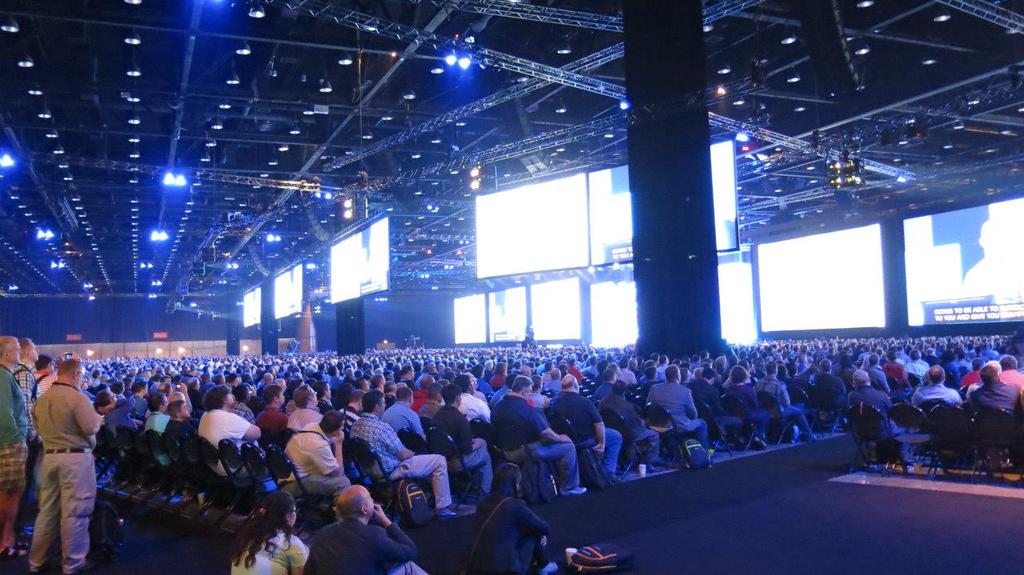
IT conferences have always been a mixed bag of experiences for me. Some amount to a giant sales pitch with little value. The good ones cram a year’s worth of training and collaboration into a few days. They are almost always prohibitively expensive to attend when you factor in travel, but this year is different.

One of the best has consistently been Microsoft’s Ignite. Some executive had the bright idea to combine all of what used to be individual conferences like Tech-Ed into a single event. The result was a combination keynote, training, and exhibition. Being able to learn DAG and AG architecture from the actual Exchange and SQL teams has had an impact on my career.

Due to the pandemic, Ignite will be a virtual conference this year. Will it be as effective? That is hard to say. SolarWinds’ Thwack Camp has always been on-line and also makes my top five. In any case, Ignite is free, you just need a Microsoft account to register. It runs September 22-24. Sign-up or get more information at https://myignite.microsoft.com/home .

VMware’s VMworld has been a heavy hitter on the conference circuit since it’s inception. Some would argue that VMworld’s format is what sparked the Microsoft Execs idea for Ignite. Featuring a renown vendor exhibition, training sessions on topics like VDI and cloud infrastructure, along with keynotes from some of the most important players in IT. It is almost impossible to walk away from VMworld without learning something useful.

VMworld is also virtual and free this year. It runs September 29th – October 1st, register at https://www.vmworld.com/en/index.html .

Install an Advanced Home Network – Part 4 Network Configuration

This series is all about installing an advanced software defined network where a controller ensures that our equipment works together. So far we’ve learned what equipment to purchase, how to make network cables, and how to wire our house. Now we need to configure the modem, network edge device, switches, and wireless access points to all work in harmony. This is an exceptionally long post but there is no good place to take a break. Once you start this process you will need to continue until you are completely finished. Warn the family that the Internet is going to be down for a few hours, it’s time to get into it.

In big picture terms we are building a LAN (private network) and bridging it with a WAN (Internet). Your ISP probably set you up with an all-in-one modem, router, firewall, switch, and wireless access point. The first step in our project is to turn off these functions so that they are not interfering with the new network.  You are not breaking any rules, most ISPs do not mind if you do this. Many make it easy, or will help you over the phone.

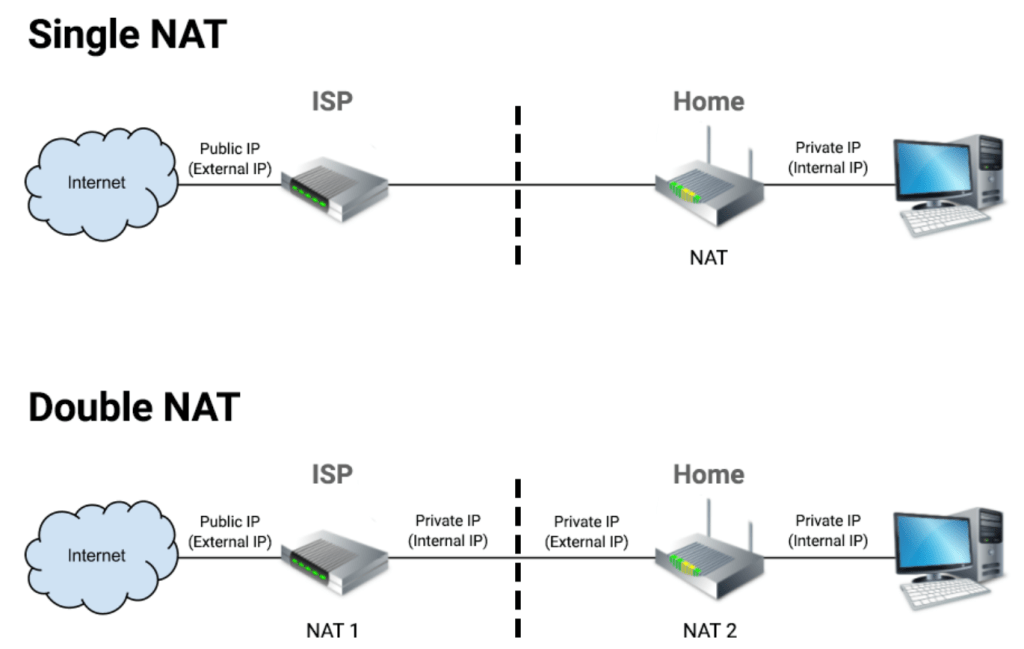
Your ISP’s device (modem) is running network address translation (NAT) to connect all of your stuff through a single public IP address. The details aren’t important, what matters is that having two devices running NAT causes all sorts of problems on networks, especially with real-time communications like gaming, VoIP, and video conferencing. To avoid the double-NAT situation we need to put your ISP device into bridge mode. Instead of behaving like a firewall or gatekeeper your ISP device will pass the Internet public address straight though. Your new edge device will take over the firewall duties.

Single NAT is less likely to interfere with on-line activities.

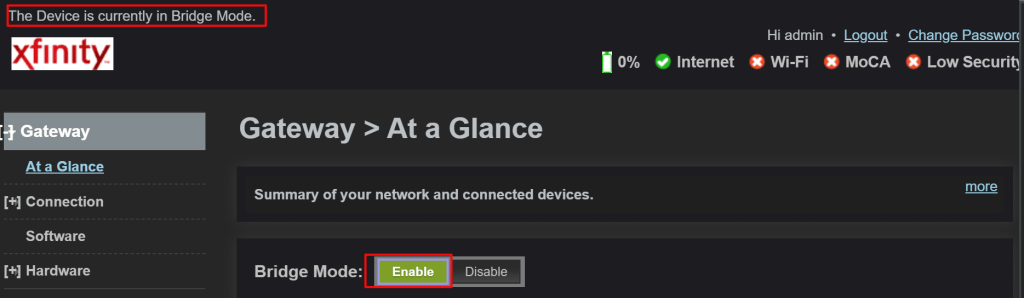
Specific directions for configuring bridge mode aren’t possible, but in general you logon to the admin page and under the settings will be the option for bridge mode. If you can’t find it, locate the model number (usually on the bottom) and Google “How do I put xxxxx in bridge mode”.  If that fails, call your ISP and ask them.

If you do not see the option for Bridge Mode in your ISP modem try Google or call them

While you are in the ISP device’s console find the wireless settings and turn off the radios (usually a drop down). We’ll be using our own wireless access points and don’t want to contend with the signal interference.

Depending on which software defined network equipment you have we are either ready to install, or configure the controller. If your controller is software that gets installed on a PC, make sure that you set that computer’s IP address to fall inline with your new network.

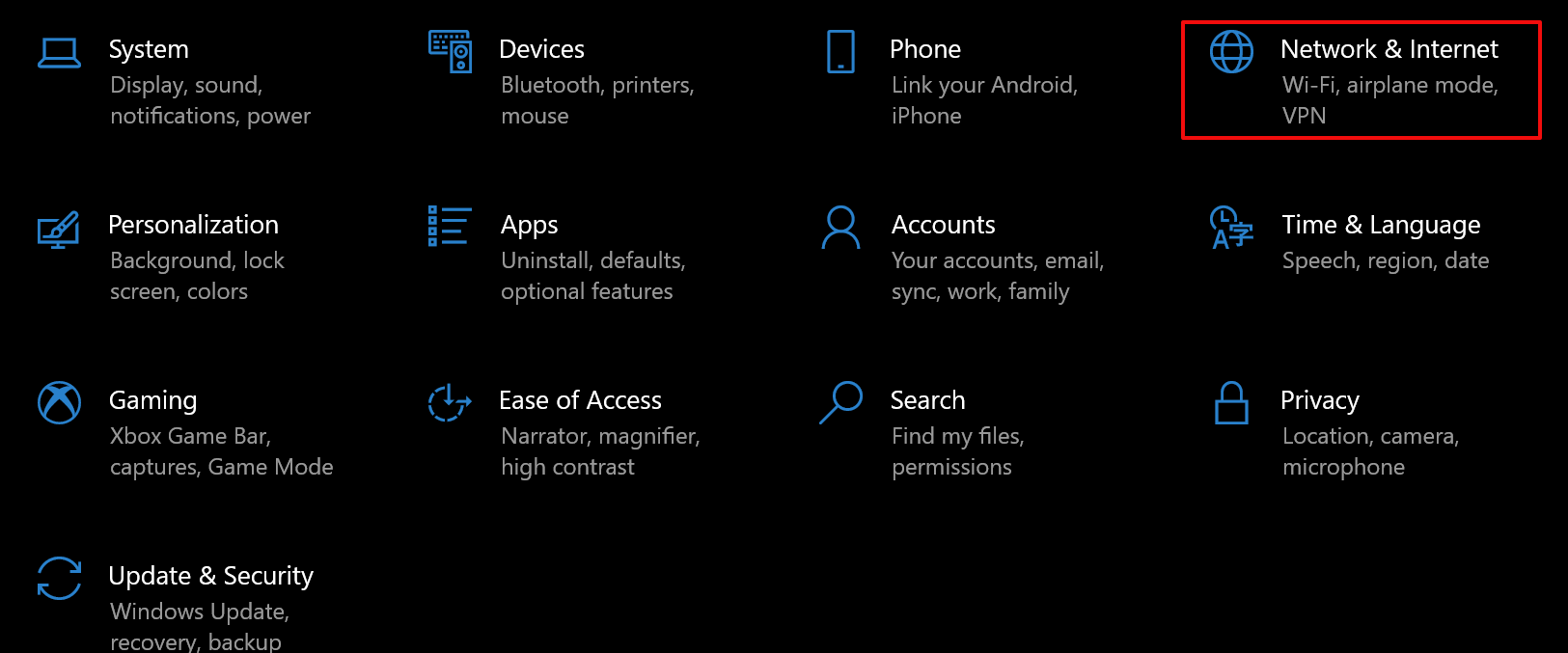
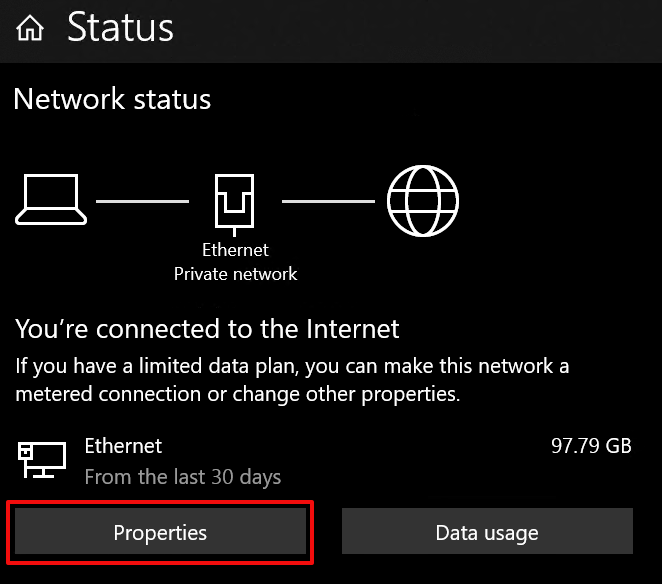
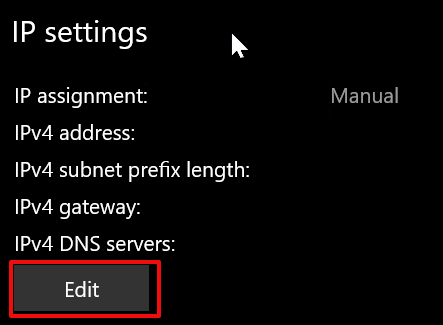
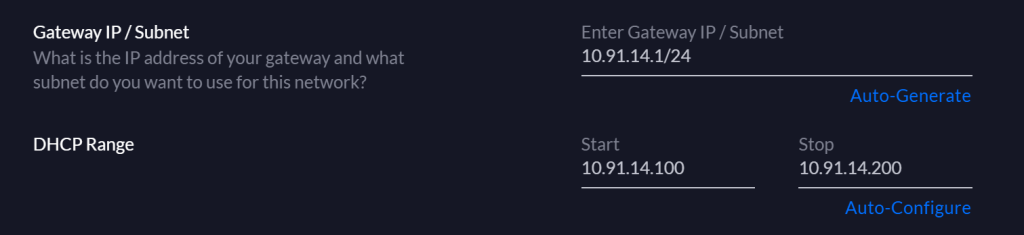
A word on choosing the IP scheme for your new network. Don’t use 192.168.1.0, 192.168.0.0, or 10.0.0.0. These over used private IP ranges cause chaos when you use a VPN to connect to work since many businesses use them too. A full explanation of private IP ranges is TMI, but something like 10.91.14.0 with a subnet of 255.255.255.0 (/24), and a gateway address of 10.91.14.1 would be a good choice. In this case, set the computer that you install the controller software on to 10.91.14.2.  If your controller is integrated with your router both services will run on the gateway address (10.91.14.1).

We’ll be using this network (10.91.14.1/24) as an example from here on, but that doesn’t mean that you have to. Try swapping the second and third set of numbers with your birth year and day. The more random your private IP scheme is, the less chance there is for conflict. The first set should be a 10, the next two sets can be whatever you choose between 1 and 254. Each device on your network will get a number (1-254) in the fourth group.

Some edge devices, switches, and access points require that you connect them directly to a computer via a network cable so that you can set their local or LAN IP address. This is done to ensure the controller can locate and program them, a process called adoption. If your devices require this type of pre-adoption configuration they will include instructions on doing so. Read and follow them carefully.

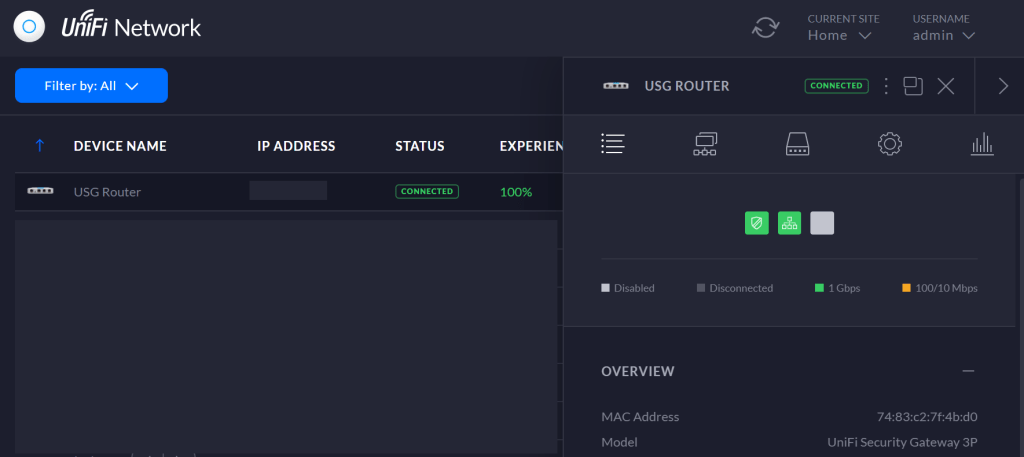
When your controller communicates with your edge device you have completed adoption, a major milestone

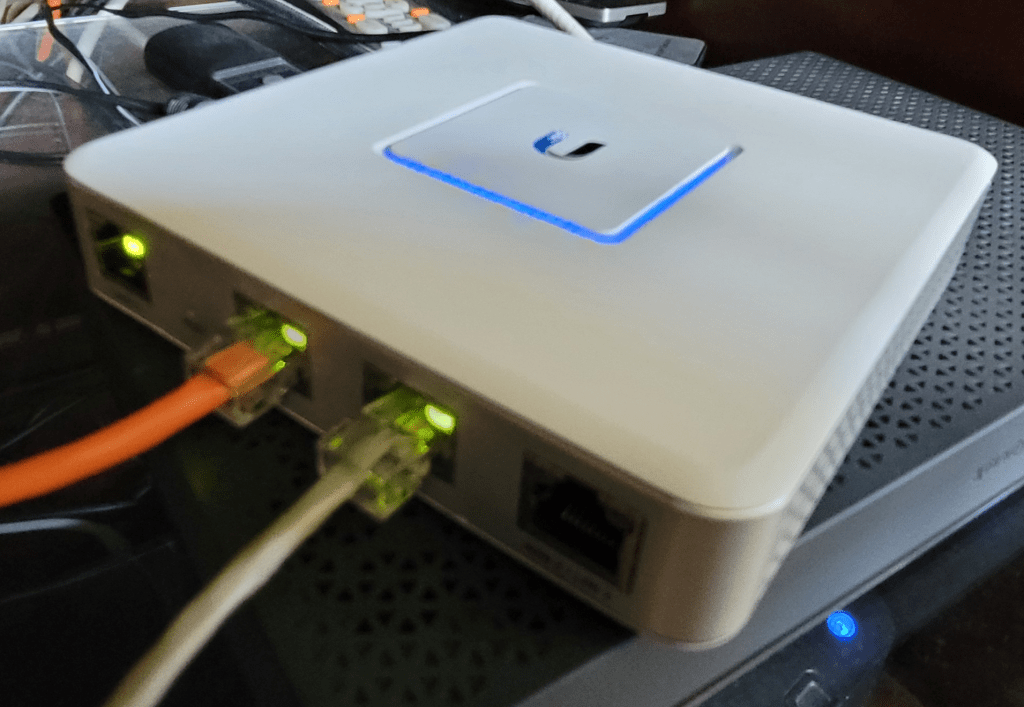
Most Internet connections are automatically configured by the Internet Service Provider. If your modem is in bridge mode and the controller has adopted the edge, you are ready to connect the Internet. Power off your modem and connect a patch cable from its network jack (1 if it has multiple) to the WAN 1 port on your edge device. Some brands label it Internet 1. I like to use a brightly colored patch cable for this connection. Power your modem up and wait for it to complete its boot process. You should see link lights (green blinking) on the modem and edge ports. The status page in your controller should show that you are connected to the Internet.

The orange cable is connected to my ISP modem, the grey to my primary network switch

Next we need to define the parameters of our LAN (Private Network). Each of the SDN vendors does this a little differently. Generally you access the console and find the Network tab, button or link (under settings in some). From there, use the fields and options to configure a network that matches what you have done so far. If you assigned your edge device our example address, then your network will be defined as 10.91.14.1/24 or 10.91.14.1 with a subnet of 255.255.255.0 (same network different notation).

If DHCP is not already on, turn it on and configure it. DHCP is a service that configures your devices to work on your network. Its main function is to hand out IP addresses from a pool (range) that you can configure. In our example network 10.91.14.3 – 10.91.14.254 are available for assignment but it is a good idea to exclude some addresses from the pool for those systems that need to be configured by hand (static). I usually configure my pool for the 100 range, 10.91.14.100 – 10.91.14.200.

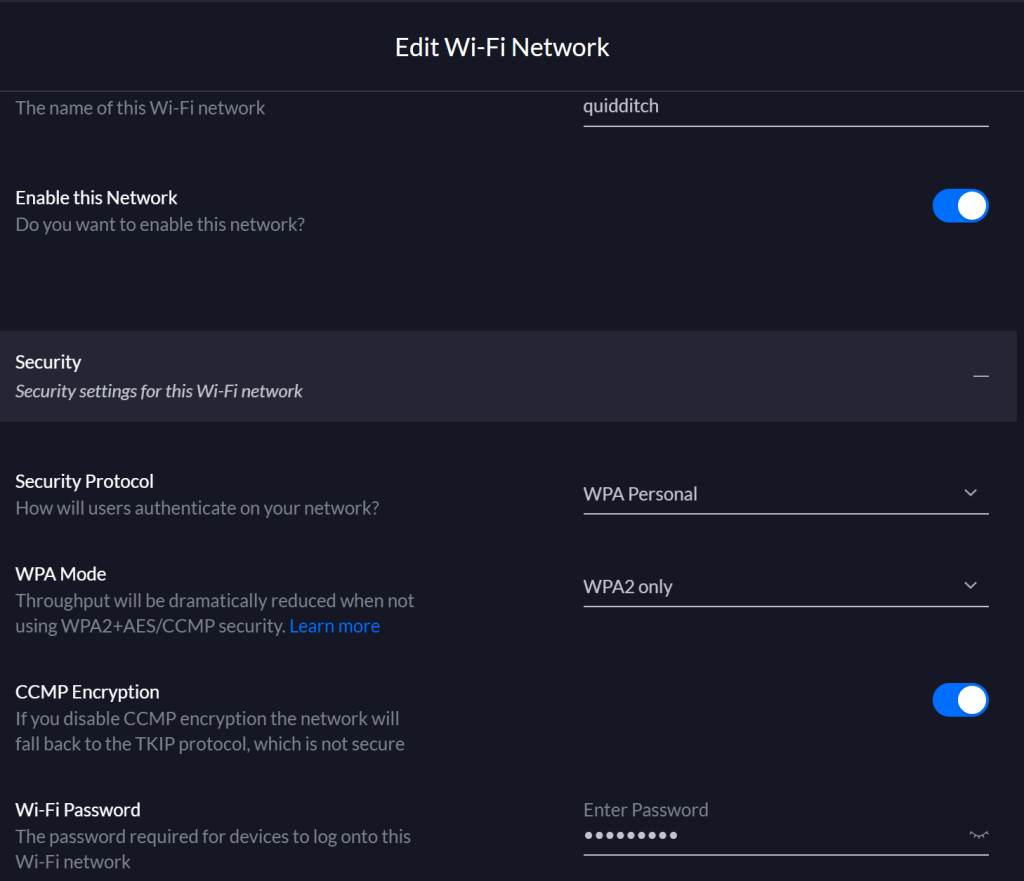
That should take care of the wired side of our network. All that is left is to setup the wireless (Wi-Fi) portion. The beauty of software defined networks is that the controller’s software does all of the heavy lifting, meaning that you don’t really need to know anything about networks. That applies to the Wi-Fi setup as well. You more or less need only to configure the name, security mode (WPA 2 Personal) and password.

Save or apply your controller changes then reboot everything connected to your network. Your modem, edge, switches, access points, computers, tablets, phones, consoles, TVs, everything that uses your network needs to be restated so that it will join up. If they don’t have a power button or reboot option then unplug them from power. Devices that use Wi-Fi will have to be connected to the new one you’ve created. When your other stuff comes back on-line the controller should detect and configure all of the components.

One of the other great features of software defined networks is their reporting. Since everything is controlled from a single point, detailed reporting about usage is a cinch. Enjoy digging into all of the new statistics on your dashboard. Many SDN networks can also be monitored or controlled from an app on your mobile. Check your app store.