
I’ve been a keyboard enthusiast for a long time. I have typed thousands upon thousands of pages of text on nearly every style of keyboard out there, except one. Until earlier this year, I had never explored a fully split-in-half keyboard.
My wrists are partially rotated when I relax my arms. Not hands flat. I have gravitated toward the wave or tilt-split keyboards that raise the center keys into a dome for this reason. They help tremendously with wrist fatigue. They have a small learning curve for most touch typists. A few hours of practice is usually enough.
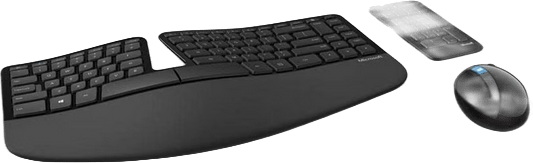
I have broad shoulders. The relationship between normal centered keyboards and the arms on most desk chairs causes me to keep my muscles engaged when typing. Most offices aren’t ok with you taking apart their furniture to remove the arms. So, to type, I need to reach-in to the center and rotate my wrists. Even on chairs with moveable or liftable arms, I’m not in a natural body posture.
I’ve been interested in full-split keyboards as a possible solution for quite some time. Until recently, the models with the features I required were priced out of my budget. Those with mechanical switches and a long enough cable were hundreds of dollars. I also wanted to maintain the lift on the center keys for my wrists. This feature is called “tenting” in the world of full split typing. As features with names often do, tenting can require costly accessories.
In the last couple of years, new manufacturers have taken on full-split keyboards. The newcomers are often looking to undercut the incumbents. They tend to offer more features at a lower price point to entice buyers. The tactic sure worked on me. I purchased a Mistel Barocco 770 about 6 months ago off Amazon for $129.00.
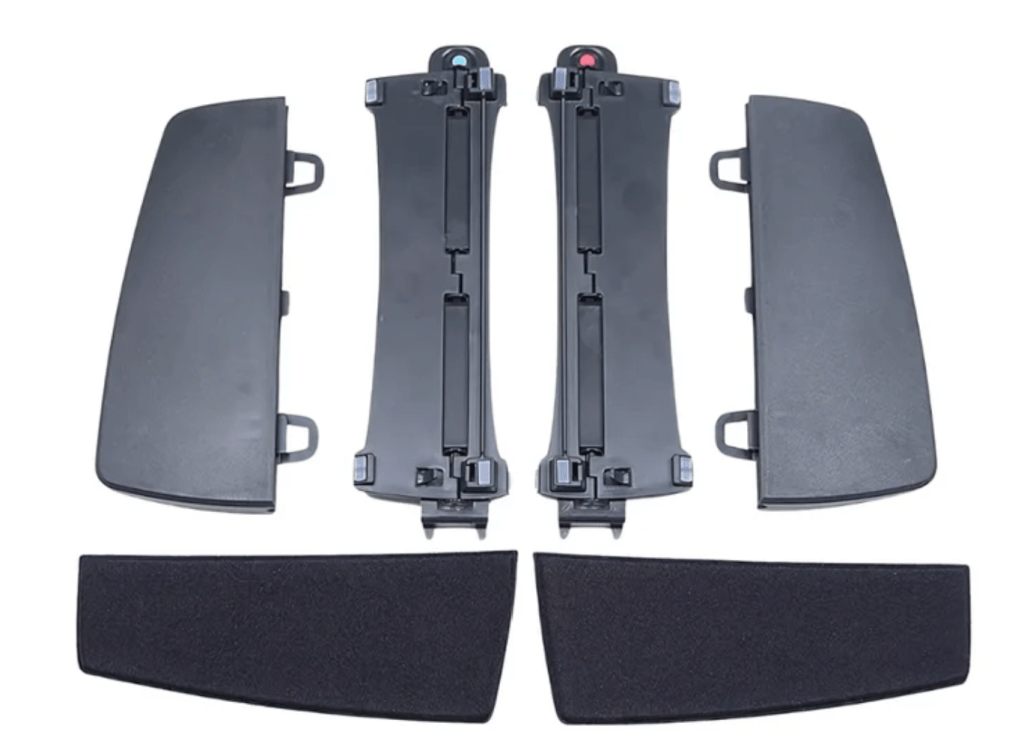
The two halves of the 770 can be tented by installing the included feet onto the inside edge of each half. The keyboard cases are hard plastic with a nice matte finish. The key caps are double shot, so no worries about the letters wearing off. The switches in mine are hot swappable Cherry MX. Each half of the keyboard is under-lit (key layer) by RGB that can be customized in several pre-programmed ways. The lights are controlled by button combos, not software.
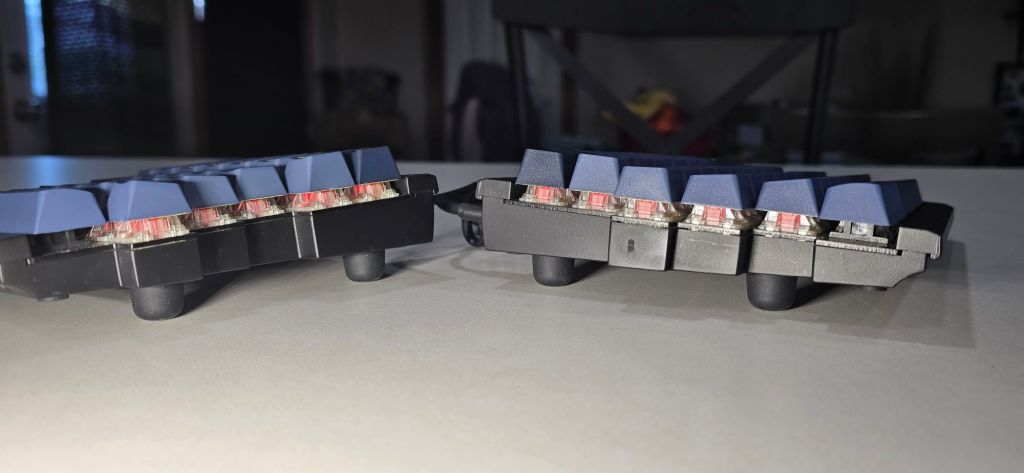
The 770 can be connected to one device via USB-C and two others using Bluetooth. You can switch between the modes/devices with a quick combo button press. Be aware that even in Bluetooth mode the keyboard still requires a cable to connect the two halves. It ships with a coiled USB-C cable for this purpose. I don’t mind the connecting cable. It stretches long enough for my needs. Some folks might prefer wireless communications between the two keyboard modules. There are models from other manufacturers available with that feature.
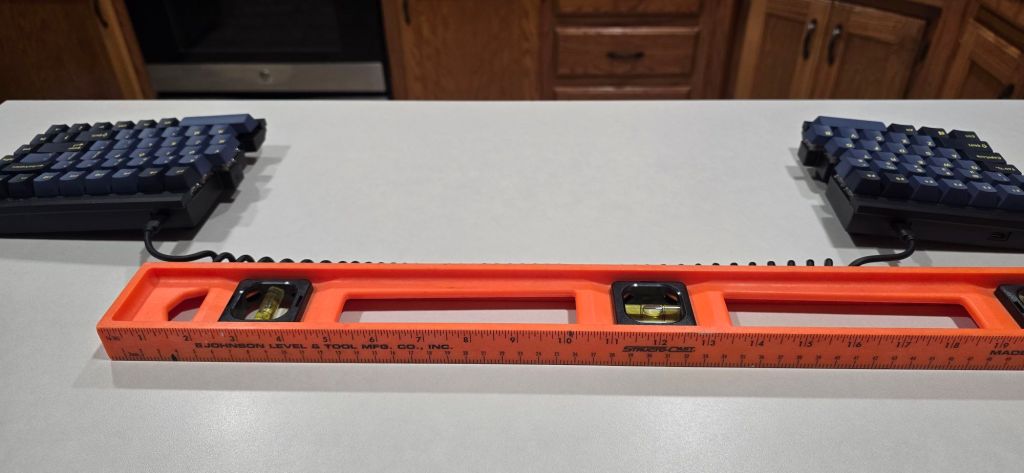
Using the 770 with its two halves more than a foot apart is a whole new skill for many people. To me the experience felt similar to playing a piano. I was acutely aware that I was using two separate hands to type. My timing was way off at first, and it was frustrating. For a good five or six days, it felt like the trade off wasn’t going to be worth it. It took a lot of extra focus to type slowly with lots of errors. Passwords were just torture.
I expected the learning curve because of the aforementioned piano lessons. Please note that I am not equating the two learning experiences beyond the dual hand control requirements. The “separate vs. together” limb control phenomenon that many of us experience has a name. It is known as Gestalt’s “Law of Proximity”. The TLDR explanation is that when our hands are close enough to each other, our brains can control them more like a single unit. It takes more focus to perform the same tasks when they’re separated by much distance.
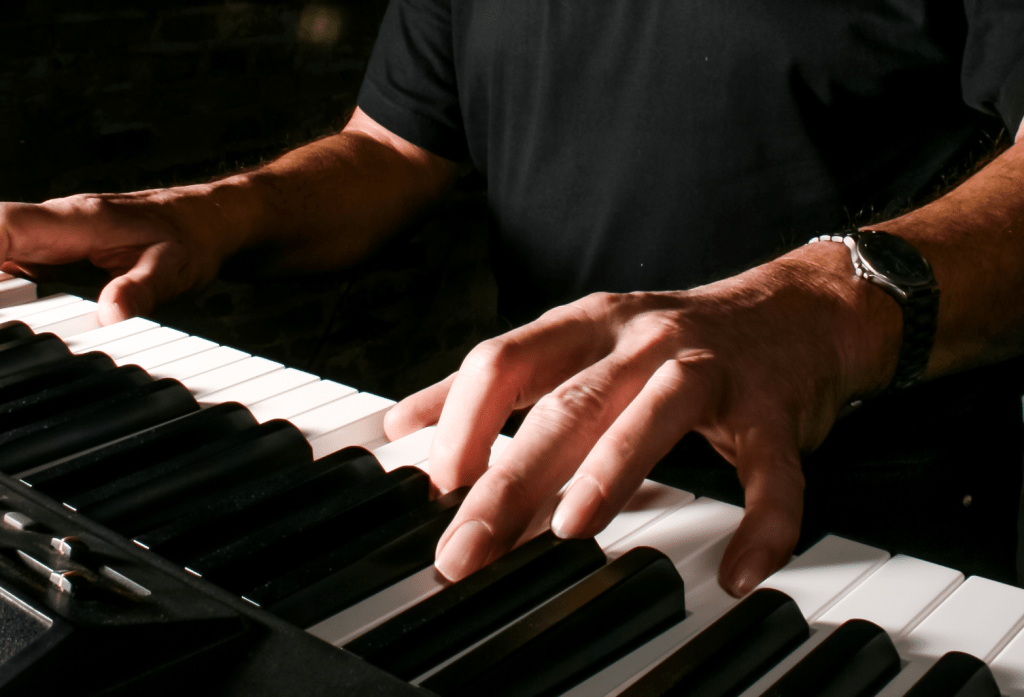
It took a lot of practice to become proficient at typing with the halves separated. Eventually, I could type as fast as I normally do. Now, months later, I know I’ll always prefer them over a centered keyboard. I should mention that I am a traditional English QWERTY touch typist. It is possible that other typing styles and or languages could be more difficult to adapt.
Everything is straight on in my desk setup now. Each keyboard half is lined up with the corresponding arm rest on my chair. On my desk, the modules are about fifteen inches apart. While typing, my shoulders and arms are straight. Their weight is fully supported by the arm rests on my chair. The keys are exactly where my hands and fingers naturally land. My mouse is in between the two keyboard halves. I am not engaging upper body muscle mass, outside of what’s required to sit in a chair, to maintain this position.
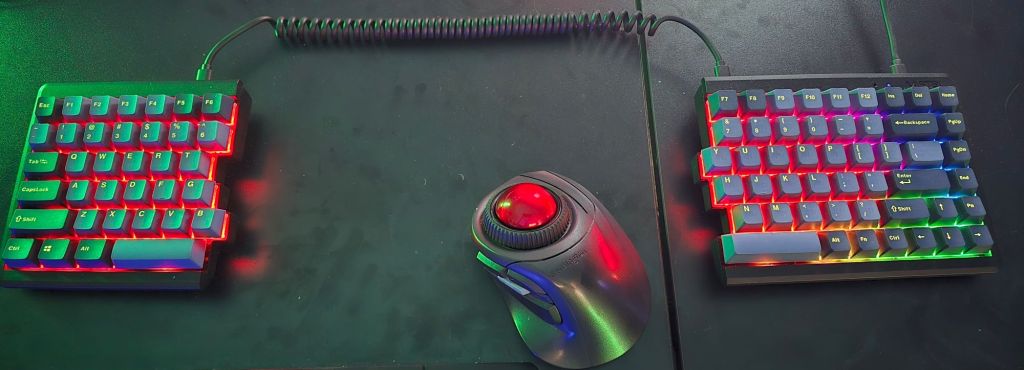
If you’ve been considering a true split keyboard, they are available for the same cost as a typical gaming keyboard now. There are many options available on the market, so research your choices carefully. I’m not recommending this specific model or brand, it’s just the one I bought.
Now that I’m used to a full split, I don’t see going back to a traditional centered keyboard, except for those on my laptops of course. The differences that better alignment with my keyboard have made in my daily life go past my expectations. The learning curve is real for most of us. The payoff has been that my entire upper body is less fatigued overall and I get fewer head and neck aches. It was worth it to me. Your mileage may vary.
 techbloggingfool.com